

Medical disclaimer: This page is for general information only and does not replace a consultation with a qualified surgeon. Prices depend on your individual assessment. Every surgery carries risks, and individual results vary.
Flights and airports
Istanbul has two airports and they are an hour apart. Book your own flights — it is almost always cheaper — but book into the right one.
| Airport | Code | Side of the city | Typical transfer |
|---|---|---|---|
| Istanbul Airport | IST | European side | 45–75 minutes |
| Sabiha Gökçen | SAW | Asian side | 60–90 minutes |
- Both are fine. Our clinics and hotels are on the European side, so IST is usually the shorter transfer, but we meet you at either.
- Tell your coordinator your flight numbers as soon as you book. Transfers are arranged around your actual arrival, not a guess.
- Book flexible or changeable fares where you can afford to. Surgery dates occasionally move for clinical reasons, and a rigid fare becomes expensive.
- Allow a buffer on the way home. Booking a connecting flight with a ninety-minute transfer after surgery is optimistic.
- Direct flights are worth paying for on the return leg. Changing planes while sore, swollen and carrying a compression garment is worse than it sounds.
Visas and entry
Most European and British visitors do not need a visa for a short stay. Check your own nationality before booking — rules change and we cannot advise on immigration.
- UK, EU and many other passports: visa-free entry for short stays is common, but limits and conditions vary by nationality and change periodically.
- Some nationalities need an e-visa, applied for online in advance. It is quick and inexpensive where it applies.
- Passport validity: Turkey requires many nationalities to have at least 150 days of validity remaining on entry. Check yours well before you book.
- Travelling for treatment does not usually require a special visa for short stays, but declare the purpose of your visit honestly if asked.
- Your coordinator can provide a letter confirming your treatment dates and accommodation, which some travellers find useful at the border.
Insurance that actually covers you
Standard travel insurance excludes elective surgery abroad. You need a policy that specifically covers medical travel, and it is not expensive.
This is the most commonly skipped step in medical travel and the one most likely to cost you. An ordinary annual travel policy will cover you for a broken ankle on holiday and exclude everything relating to a planned procedure — including complications from it, and in many cases anything at all that happens during the trip because the purpose of travel was undeclared.
What to look for
- Explicit cover for elective or cosmetic surgery abroad, named in the policy rather than absent from the exclusions.
- Cover for complications arising from the procedure, including repatriation if needed.
- Cover for an extended stay if you are not fit to fly on your planned date.
- Cancellation cover if you are declared unfit to travel before departure.
- Cover for your companion's costs where your stay is extended.
Realistic cost
Roughly £60–£150 for a single trip, depending on your age, the procedure and the level of cover. Specialist medical travel insurers exist in most markets; a general comparison site will usually not surface them. Budget for it when you compare total costs, and buy it when you book rather than the week before.
Where you will be cared for
Where you stay
See where you will have your surgery and where you will recover, before you travel.


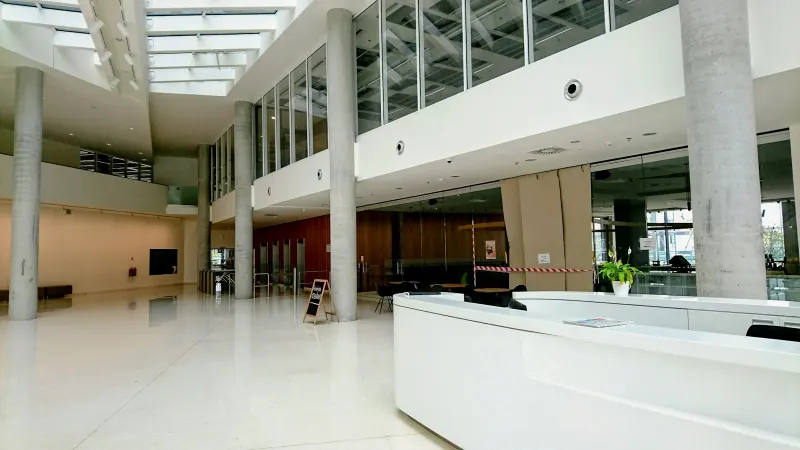

What you can check before you pay
The hospital
- Accreditation
- JCI-accredited, with the certificate number given to you in writing before any deposit.
- Licence
- Turkish Ministry of Health licence, named and verifiable independently rather than described in general terms.
- Intensive care
- On site, in the same building, for every procedure under general anaesthetic. Not "available nearby".
- Anaesthesia
- A consultant anaesthetist present throughout the operation — not supervising several theatres from elsewhere.
- Nursing
- 24-hour nursing, with an English-speaking nurse on each shift and an interpreter for clinical conversations.
Photos are not proof
Photographs show you the rooms; they do not tell you whether there is an intensive care unit behind them. The facility is named to you in writing before you pay, with its licence and accreditation numbers, so you can verify it as well as see it.
If you want to see the building in person, ask — we can usually arrange a visit before you decide, and a provider unwilling to let you look around is telling you something.
How we verify a facility




Flying home after surgery
The journey home is the part of medical travel most underestimated. Here is what actually helps, by procedure.
Your surgeon confirms you are fit to fly before you leave, and the stay lengths in our packages are set so that happens at a sensible point rather than a convenient one. What follows is about making the flight itself bearable.
Everyone
- Compression stockings from the moment you leave the hotel until you are home. Not optional after any surgery.
- Aisle seat, and walk the cabin every hour. Blood clot risk is the reason the stay is as long as it is, and sitting still for four hours undoes some of that care.
- Drink water steadily and avoid alcohol entirely.
- Carry medication in hand luggage, in original packaging, with your discharge summary.
- Allow generous connection times, or avoid connections on the return leg altogether.
By procedure
- After a BBL: you sit on your BBL pillow for the entire flight. Book an aisle seat so you can stand regularly, and tell your coordinator how long your journey is so your flight day can be planned around it.
- After abdominal surgery: a loose waistband, your compression garment, and nothing heavy to lift. Ask for help with bags rather than reaching into an overhead locker.
- After a hair transplant: a loose hood rather than a cap, and a travel pillow so nothing presses on the back of your head. Do not let a headrest touch the donor area.
- After rhinoplasty: cabin pressure is uncomfortable rather than harmful. Avoid blowing your nose, and use the saline spray you were given.
- After a sinus lift: this is the one case where flying too early genuinely matters. Day five at the earliest, and tell your coordinator if your route involves several sectors.
- After eyelid surgery: bring lubricating drops and use them hourly. Cabin air is extremely dry and your blink mechanics are temporarily altered.
Practical things nobody mentions
Money, phones, weather, food and the small details that make a week in Istanbul easier.
Money
- The currency is the Turkish lira. Card payment is universal in hotels, clinics and restaurants.
- Your package balance is settled with the clinic or with Velsa as set out in your quote — ask in advance which, and in which currency, so there are no card limit surprises.
- Tell your bank you are travelling. A blocked card on the day you settle a hospital balance is an avoidable problem.
- Carry a small amount of cash for taxis and tips. Most of your transport is already arranged.
Phones and connectivity
- Turkey is outside EU roaming arrangements, so check your tariff. An eSIM bought before you fly is usually the cheapest option.
- You will be using WhatsApp with your coordinator constantly. Make sure you have data, not just hotel wifi.
- Turkey registers phone IMEI numbers for long stays. For a trip of a week or two this does not affect you.
Weather and what to pack
- Istanbul summers are hot and humid, which matters if you are wearing a compression garment. Spring and autumn are considerably more comfortable for recovery.
- Winters are cold and wet. Pack layers rather than one heavy coat, because hospitals are warm.
- Loose, front-opening clothing for anything involving the chest or abdomen. Slip-on shoes for anything that makes bending difficult.
- A second compression garment so you can wash one and wear the other.
Food and drink
- Hotel breakfast is included. Lunches and dinners are yours, and Istanbul is inexpensive by Western European standards.
- If you are on a staged post-operative diet, tell your coordinator — hotels will accommodate soups, purées and soft food.
- Tap water is chlorinated and generally safe but most people drink bottled. After abdominal surgery, stick to bottled.
- No alcohol for at least a week after any surgery, and not at all while on antibiotics or strong painkillers.
Free online consultation
Ask us about your trip
- 1Share your detailsFill in the form in under a minute.
- 2Send your photosYour coordinator tells you which photos we need, via WhatsApp or email.
- 3Receive your planA specialist reviews your case and you get a written, all-inclusive quote.
FAQ
Travel and accommodation: frequently asked questions
Either works and we meet you at both. Istanbul Airport (IST) is on the European side and usually the shorter transfer to our hotels and clinics; Sabiha Gökçen (SAW) is on the Asian side and takes 60–90 minutes. Tell your coordinator your flight numbers as soon as you book.
Because bundling them means flying on our schedule, from our airport, at our fare. Booking your own is almost always cheaper and far more flexible, and a delay or date change stays yours to manage rather than ours to charge for.
Many nationalities including UK and EU passport holders do not for short stays, but rules vary and change. Check with the Turkish consulate or your own foreign office before booking. Your coordinator can provide a letter confirming your treatment dates and accommodation.
A policy that explicitly covers elective surgery abroad — standard travel insurance excludes it. Look for cover for complications, repatriation, an extended stay if you are not fit to fly, and your companion. Budget £60–£150, and declare the surgery when you buy it.
Yes, and we encourage it for any procedure under general anaesthetic. Packages include a twin room, so accommodation and transfers cost nothing extra for a companion. They book their own flight and pay for their own meals.
Four-star hotels close to the clinic, with breakfast included and a twin room as standard. You will be spending several days recovering there, so proximity and comfort matter more than the view.
Yes — airport to hotel, hotel to hospital or clinic and back, and hotel to airport, for every appointment in your plan. You do not arrange or pay for taxis as part of your treatment.
On the day set out in your package, after your surgeon has confirmed you are fit. The stay lengths exist for clinical reasons — a sleeve leak appears between days three and seven, a sinus lift should not meet cabin pressure before day five. We do not shorten them.
Then you stay, and we help rearrange accommodation. This is exactly what the extended-stay element of medical travel insurance is for, which is why we recommend buying a policy that includes it.
Many patients do, and we can extend hotel nights at cost. Be realistic about what you will feel like — sightseeing after abdominal surgery is not what people imagine. Plan sightseeing days before treatment rather than after, if you can.
As set out in your written quote — before discharge rather than on arrival. Ask in advance whether it is paid to the clinic or to Velsa, and in which currency, and tell your bank you are travelling so a card limit does not become a problem.
Your coordinator speaks English and is reachable by WhatsApp at any hour throughout. Consultations are conducted in English with interpretation where needed. Buy an eSIM before you fly so you have data rather than relying on hotel wifi.