

What is a breast reduction?
A reduction mammoplasty removes a measured amount of breast tissue, fat and skin from each breast, reshapes what remains into a higher, firmer mound and moves the nipple to a proportionate position.
Mechanically it is a breast lift with tissue removal added, and the scar patterns are the same. What makes it a different operation in practice is the reason people have it. Most breast reduction patients are not primarily seeking a cosmetic change — they come with grooving from bra straps, persistent back and neck pain, rashes under the breast, difficulty exercising and years of difficulty finding clothes that fit.
That is also why satisfaction rates for breast reduction are among the highest in plastic surgery. Published studies consistently report improvement in physical symptoms, posture and quality of life in the large majority of patients, and it is one of the few cosmetic operations that is routinely funded on medical grounds in some health systems.
How much can be removed
| Starting size | Typical removal per side | Usual result | Scar pattern |
|---|---|---|---|
| DD to E | 250–400 g | C to D | Vertical |
| F to G | 400–700 g | C to D | Anchor |
| H to J | 700–1,100 g | C to D | Anchor |
| Above J | 1,100 g or more | D or above | Anchor, sometimes free graft |
There is a ceiling. Removing a very large volume means the nipple has to travel a long distance on its blood supply, and beyond a certain point surgeons will either stage the operation or detach and replace the nipple as a free graft — which reliably removes sensation and the ability to breastfeed. Your surgeon should tell you in advance if your case approaches that territory.
The three incision patterns
Around the areola
The smallest scar, and it only lifts a little
Lollipop
Around the areola and straight down. Lifts most cases well
Anchor
Adds a scar in the fold. For large lifts and reductions, where nothing else reaches
How much does a breast reduction cost in Turkey?
A Velsa all-inclusive breast reduction package in Istanbul costs £2,900–£4,100. The same operation privately in the UK is typically £7,000–£10,000.
| Procedure | Price (GBP) | Hospital nights | Nights in Turkey |
|---|---|---|---|
| Breast reduction, moderate | £2,900–£3,400 | 1 | 7 |
| Breast reduction, large | £3,400–£4,100 | 1–2 | 7 |
| Reduction with liposuction to the armpit | £3,200–£4,300 | 1–2 | 7 |
| Male breast reduction (gynecomastia) | £1,900–£2,800 | 1 | 6 |
| Breast lift without reduction | £2,700–£3,900 | 1 | 7 |
What the package includes
- Surgeon and anaesthetist fees
- One to two nights in a private hospital room
- All pre-operative blood tests and scans
- Histology on the removed tissue
- Six nights in a four-star hotel with breakfast
- All airport, hotel and hospital transfers
- A personal English-speaking coordinator
- Post-operative surgical bra and medication
- Scar care products for the first three months
- Twelve months of remote aftercare
Histology is included, and it matters
All removed breast tissue is sent for histological examination. This is standard practice and occasionally identifies something unexpected — an incidental finding that would otherwise have gone undetected. Any clinic that does not send reduction tissue to pathology is cutting a corner you should not accept.
What it costs elsewhere
£2,900–£4,100
All-inclusive with Velsa: surgeon, hospital, hotel, transfers and twelve months of aftercare
£5,000+
Typical saving against the UK, mid-range against mid-range, before flights
59%
Less than the typical UK price
Bars span the usual range in each market, not a single quoted figure. Non-Turkish figures are indicative market ranges rather than quotes from named providers.
US and UK figures are typically the surgeon and facility only. Flights, accommodation, transfers and follow-up are extra in those markets and included in the Velsa price, which is the comparison that actually matters.
Your own price comes from a written quote after a clinician has reviewed your case. Nothing on this chart is a quote.
Why do patients from the UK, US and Europe choose Turkey?
Patients choose Turkey for lower all-inclusive prices, experienced plastic surgeons who operate at high volume, modern private hospitals, short waiting times and easy direct flights from most European and many US cities.
Turkey has become one of the world's leading medical travel destinations. According to Turkish industry figures reported in July 2026, the country welcomed around 1.4 million health tourists in 2025, generating over $3 billion in revenue. Aesthetic surgery is one of the most requested categories.
- Value: lower operating and living costs mean you pay less for the same type of surgery and hospital care.
- Experience: leading surgeons in Istanbul and other major cities perform aesthetic operations every week.
- Speed: consultations can be arranged online within days, and surgery dates are flexible.
- Access: most UK and European airports have direct flights of around 3–4 hours.
- Recovery comfort: you recover in a hotel with a coordinator on hand, rather than managing alone at home.
Every Velsa quote names the surgeon and the hospital before you pay, so you can check both yourself.
Am I a good candidate for a breast reduction?
The best candidates have physical symptoms from breast weight, are at a stable weight, have finished having children, and are non-smokers.
A breast reduction is usually suitable if
- You have persistent back, neck or shoulder pain related to breast weight.
- Bra straps leave deep grooves in your shoulders.
- You get rashes or skin irritation in the fold beneath your breasts.
- Exercise is limited by discomfort or by not finding adequate support.
- Your breasts are disproportionate to your frame, or noticeably different in size.
- You are a non-smoker, or can stop at least four weeks before surgery.
You may need to wait, or address something first
- You are planning more children: pregnancy and breastfeeding will change the result.
- You are breastfeeding: wait at least six months after you stop.
- You are actively losing weight: breast size falls with weight, so reaching a stable point first avoids over-correcting.
- You have an untreated breast lump or an unresolved mammogram finding.
- You smoke heavily: nipple blood supply is at genuine risk, and most surgeons will decline.
- Your BMI is above 35: anaesthetic and wound risks rise, and many surgeons ask for weight loss first.
Our self-check below gives you an honest starting answer, and a Velsa plastic surgeon reviews your photographs free of charge before you commit to anything.
1-minute self-check
Am I a good candidate for a breast reduction?
Answer 6 quick questions to see if a breast reduction could be right for you. No personal details needed to see your result.
Your breast reduction journey in Turkey, day by day
Seven nights in Istanbul: one or two in hospital and the rest in the hotel, so your surgeon can watch the wounds through the critical first week.
- 1Before you travel: you send photographs, measurements and a short medical history, including your symptoms. A plastic surgeon assesses how much tissue should come out and recommends a scar pattern. You receive a written fixed quote.
- 2Day 1 — arrival: your driver meets you at Istanbul airport and takes you to the hotel. Nothing medical happens today.
- 3Day 2 — consultation and surgery: blood tests, ECG and a chest check, then a face-to-face consultation where the markings are drawn with you standing and the target size is agreed. Surgery the same afternoon, taking three to four hours.
- 4Day 3 — in hospital: drains, if used, are monitored. Most patients are discharged today; larger reductions stay a second night.
- 5Days 4–6 — hotel recovery: gentle walking, surgical bra day and night, no lifting above shoulder height. Your coordinator checks in daily.
- 6Day 7 — final check: dressings changed, wounds inspected — particularly the T-junction on an anchor scar — and your surgeon confirms you are fit to fly.
- 7Day 8 — fly home with your histology arrangements, scar care products and written aftercare.
- 8After you are home: nurse check-ins at one week, six weeks, three months and twelve months, and your histology result sent to you when available.
Where you will be cared for
Our partner hospital and hotel
See where you will have your surgery and where you will recover, before you travel.


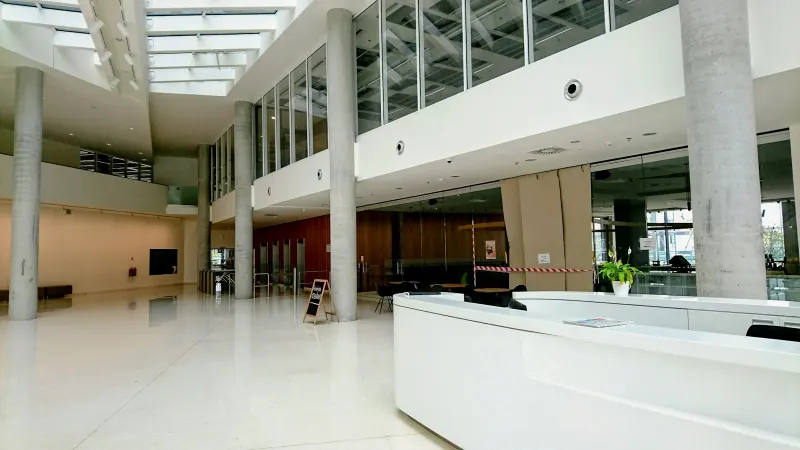

What you can check before you pay
The hospital
- Accreditation
- JCI-accredited, with the certificate number given to you in writing before any deposit.
- Licence
- Turkish Ministry of Health licence, named and verifiable independently rather than described in general terms.
- Intensive care
- On site, in the same building, for every procedure under general anaesthetic. Not "available nearby".
- Anaesthesia
- A consultant anaesthetist present throughout the operation — not supervising several theatres from elsewhere.
- Nursing
- 24-hour nursing, with an English-speaking nurse on each shift and an interpreter for clinical conversations.
Photos are not proof
Photographs show you the rooms; they do not tell you whether there is an intensive care unit behind them. The facility is named to you in writing before you pay, with its licence and accreditation numbers, so you can verify it as well as see it.
If you want to see the building in person, ask — we can usually arrange a visit before you decide, and a provider unwilling to let you look around is telling you something.
How we verify a facility




How is a breast reduction performed?
Three to four hours under general anaesthetic, removing a measured weight of tissue from each side and reshaping what remains.
- 1Marking: with you standing, your surgeon marks the new nipple position, the tissue to be removed and the scar pattern. The target size is agreed before you go to sleep.
- 2Anaesthetic: a consultant anaesthetist puts you to sleep. You are monitored throughout and for the first hours afterwards.
- 3Preserving the nipple: the nipple and areola remain attached to the breast on a pedicle carrying their blood and nerve supply. Which pedicle is used — inferior, superior or medial — depends on how far the nipple must travel.
- 4Removing tissue: breast tissue, fat and skin are removed from the lower and outer parts of the breast. Each side is weighed so the two match, and all tissue is sent for histology.
- 5Reshaping: the remaining tissue is reshaped into a higher, more projected mound and secured to the chest wall, which is what makes the result last.
- 6Reducing the areola: stretched areolae are reduced to a proportionate size.
- 7Checking symmetry: you are sat upright on the operating table so your surgeon can compare volume, shape and nipple position before closing.
- 8Closing: closed in layers with dissolving sutures, drains placed in larger reductions, and a surgical bra fitted before you wake.
Breast reduction recovery timeline
Expect two to three weeks before a desk job, six weeks before full exercise, and six to twelve months before the final shape — but symptom relief often arrives within days.
- Days 1–3: soreness and swelling, with drains removed before discharge if used. Many patients notice the weight off their shoulders immediately.
- Week 1: swelling peaks then settles. Surgical bra day and night. Sleep on your back, slightly propped. No lifting anything heavy.
- Weeks 2–3: most patients are back at a desk job and driving. Scars are at their most obvious and the T-junction needs watching.
- Weeks 4–6: light exercise such as walking and swimming once wounds are fully healed. No chest or shoulder work.
- Weeks 6–8: full exercise with your surgeon's approval, and the first time most patients run comfortably in years.
- Months 3–6: the breast softens and settles into its final shape as swelling resolves.
- Months 6–18: scars flatten and fade from pink to pale.
Is it safe to have a breast reduction in Turkey?
Breast reduction is a well-established operation with high satisfaction rates, but it involves more tissue removal than any other breast procedure and carries real risks to nipple blood supply and wound healing.
Velsa works only with JCI-accredited private hospitals in Istanbul and with plastic surgeons registered with the Turkish Ministry of Health who hold Turkish Society of Plastic, Reconstructive and Aesthetic Surgeons membership. All removed tissue goes to histology as standard.
Risks you should know about
- Scarring: unavoidable and permanent, and more extensive than in most breast surgery.
- Wound breakdown: most often at the T-junction, and more likely in smokers and larger reductions.
- Nipple sensation changes: common temporarily; permanent change affects a meaningful minority.
- Nipple blood supply problems: rare, strongly linked to smoking, and the most serious risk.
- Loss of ability to breastfeed: more likely than after a lift, because more glandular tissue is removed.
- Asymmetry: breasts are rarely identical to begin with, and a small difference usually remains.
- Fat necrosis: firm lumps where fat has not survived, which usually soften over months.
- Blood clots: the reason for compression stockings, early walking and a seven-night stay.
Tell your radiographer you have had a reduction when you next have a mammogram. Surgery changes how breast tissue appears on imaging, and knowing what was done makes the scan much easier to interpret.
Your medical team
Meet your breast reduction team
You meet your specialist in person before treatment, and they follow your recovery until you are fully healed.
Meet the whole teamFree online consultation
Start your breast reduction journey
- 1Share your detailsFill in the form in under a minute.
- 2Send your photosYour coordinator tells you which photos we need, via WhatsApp or email.
- 3Receive your planA specialist reviews your case and you get a written, all-inclusive quote.
Can a breast reduction be combined with other procedures?
Liposuction to the armpit and chest wall is commonly added, and a reduction is sometimes part of a wider post-weight-loss plan. Combining with abdominal surgery is possible but needs care.
A reduction is already a three to four hour operation. Adding significantly to it pushes total anaesthetic time toward the limit most surgeons consider safe in one sitting, so combinations are chosen carefully rather than stacked.
Commonly combined with
- Liposuction to the axillary tail: the fullness that spills toward the armpit is fat rather than breast tissue, and removing it finishes the result properly.
- Liposuction to the chest wall or back rolls: often the difference between a good result and a seamless one.
- Tummy tuck: possible as part of a mommy makeover, though total theatre time approaches five to six hours.
- Arm lift: frequently wanted after major weight loss, but usually planned as a second trip rather than the same operation.
If you have had significant weight loss and want several areas addressed, Velsa will usually plan two trips rather than one very long operation. The risk of clots and wound problems rises steeply beyond six hours, and a reduction is not the procedure to rush.
How to prepare for your breast reduction
Stop smoking at least four weeks before, reach a stable weight, arrange breast screening if you are over 40, and organise help at home for the first fortnight.
- Smoking: stop at least four weeks before and after. Nicotine is the strongest modifiable risk factor for both wound breakdown and nipple complications.
- Weight: reach a weight you can maintain. Breast size falls with weight loss, so operating mid-diet risks over-reducing.
- Medication: tell your surgeon everything you take. Blood thinners, anti-inflammatories, the combined pill and some supplements may need pausing.
- Breast screening: if you are over 40 or have a family history, have a mammogram or ultrasound before you travel.
- Time off: plan 2–3 weeks away from work and 6 weeks away from the gym, heavy lifting and lifting children.
- Packing list: front-opening or zip tops, slip-on shoes, a travel pillow, compression stockings and your medication in its original packaging.
Breast reduction results and scars
Symptom relief is often immediate; the final shape takes six to twelve months. Scars are permanent and more extensive than in other breast surgery, fading from pink to pale over 12 to 18 months.
Most patients report that the physical change — being able to run, sleep comfortably, buy clothes that fit, go without grooved shoulders — matters more than the cosmetic one. That is worth saying plainly, because breast reduction is often filed under cosmetic surgery when for the majority of patients it is functional.
The result is durable but not static. Weight gain, pregnancy and time will all change the breast again, which is why surgeons suggest completing your family and reaching a stable weight first. Scar care from week three — silicone gel or tape plus strict sun protection — makes a genuine difference, and the T-junction scar in particular benefits from it. As consented cases are added, our breast surgery before and after gallery shows scar maturation at six, twelve and eighteen months.
FAQ
Breast reduction in Turkey: frequently asked questions
At Velsa, £2,900–£4,100 as an all-inclusive package depending on the size of reduction. That covers the surgeon, anaesthetist, one to two hospital nights, histology, six hotel nights, all transfers, scar care products and twelve months of aftercare. Flights are not included.
Typically 250–400 g per side from a DD–E, 400–700 g from an F–G, and 700–1,100 g from an H–J. Beyond roughly 1,200 g per side, the nipple may have to travel too far for its blood supply, and a free nipple graft becomes the alternative.
Most surgeons aim for a C or D cup, chosen for proportion to your frame rather than minimum size. An over-aggressive reduction looks disproportionate on a broad frame and risks the nipple unnecessarily.
For most patients, substantially. Published studies consistently report improvement in back, neck and shoulder symptoms, and many patients notice the weight off their shoulders within days. It is one of the highest-satisfaction operations in plastic surgery.
Possibly, but less reliably than after a lift, because more glandular tissue and duct structure is removed. If breastfeeding matters to you, tell your surgeon — it may change the technique, and if you are planning a pregnancy soon, waiting is usually advised.
Most reductions use an anchor pattern: around the areola, vertically down to the fold, and horizontally along the fold. They are permanent and more extensive than in other breast surgery, fading from pink to pale over 12 to 18 months.
Seven nights — one or two in hospital and the rest in the hotel, so your surgeon can check the wounds and particularly the T-junction before you fly.
Temporary numbness is very common and usually improves over three to six months. A meaningful minority have some permanent change, and the risk rises with the size of reduction because the nipple travels further.
Possibly. Breast reduction is funded on medical grounds in some health systems where symptoms and BMI criteria are met. Ask your GP before paying privately anywhere — we would genuinely rather you got it free at home.
The removed tissue is gone permanently, but the remaining breast responds to weight gain, pregnancy and hormonal change like any other. Significant weight gain can increase size again.
It is weighed, recorded and sent for histological examination as standard. This occasionally identifies an incidental finding that would otherwise have gone undetected. Any clinic not sending reduction tissue to pathology is cutting a corner.
Contact your coordinator immediately — this is most likely at the T-junction and usually manageable with dressings if caught early. Velsa arranges local review and covers revision under the aftercare terms in your written quote where the problem relates to the surgery.
Medical disclaimer: This page is for general information only and does not replace a consultation with a qualified surgeon. Prices depend on your individual assessment. Every surgery carries risks, and individual results vary.