

What is a gastric balloon?
A gastric balloon is a soft silicone sphere placed into the stomach through the mouth during a short endoscopy, then filled with sterile saline. It occupies space, so smaller meals feel satisfying and the stomach empties more slowly.
Nothing is cut, stapled or removed. You are lightly sedated rather than given a general anaesthetic, the procedure takes twenty to thirty minutes, and you go back to your hotel the same day. At six or twelve months the balloon is deflated and removed the same way it went in. Your anatomy is exactly as it was before.
That reversibility is the balloon's great strength and its great weakness. It is the lowest-risk option on the list, and the only one you can change your mind about — but it is also temporary, and the weight comes back for anyone who treats it as a device rather than as a supported window in which to change their eating.
Types of balloon
| Type | Duration | Placement | Typical total weight loss |
|---|---|---|---|
| Fluid-filled (Orbera, Spatz) | 6–12 months | Endoscopy, sedated | 10–15% |
| Adjustable (Spatz3) | 12 months | Endoscopy, sedated | 12–18% |
| Swallowable (Allurion/Elipse) | 4 months | Swallowed capsule, no endoscopy | 8–12% |
- Fluid-filled balloons: the established standard. Placed and removed endoscopically, filled with 400–700 ml of saline tinted with blue dye so you would notice immediately if it leaked.
- Adjustable balloons: the volume can be increased later if the effect fades, or reduced if you cannot tolerate it. Useful for a twelve-month programme.
- Swallowable balloons: swallowed as a capsule with no endoscopy and no sedation, then passed naturally after about four months. Convenient, but a smaller effect over a shorter window.
The non-surgical options, and their limits
Gastric balloon
A soft balloon is placed through the mouth and filled with saline
Gastric botox
Toxin injected into the stomach wall to slow emptying
What they are not
Both are temporary. Without the habits changing, the weight returns
How much does a gastric balloon cost in Turkey?
A Velsa all-inclusive gastric balloon package in Istanbul costs £1,800–£2,400, including removal. The same treatment in the UK is typically £4,000–£6,500.
| Type | Price (GBP) | Duration | Nights in Turkey |
|---|---|---|---|
| Fluid-filled balloon, 6 months | £1,800–£2,100 | 6 months | 3 |
| Fluid-filled balloon, 12 months | £2,100–£2,400 | 12 months | 3 |
| Adjustable balloon (Spatz3) | £2,300–£2,700 | 12 months | 3 |
| Swallowable balloon (Allurion) | £2,200–£2,600 | 4 months | 2 |
| Gastric botox | £700–£1,100 | 4–6 months | 2 |
What the package includes
- Endoscopist and sedation fees
- Pre-procedure blood tests and assessment
- The balloon itself and its placement
- Removal at the end of the programme
- Three nights in a four-star hotel with breakfast
- All airport, hotel and clinic transfers
- A personal English-speaking coordinator
- Anti-nausea and anti-acid medication for the first weeks
- Dietitian consultations throughout the programme
- Monthly check-ins for the full duration
About removal
Removal is included in the Velsa price, but it means a second trip to Istanbul — a short one, two nights, and the procedure itself takes about fifteen minutes. Some patients arrange removal with a gastroenterologist at home instead, which is perfectly reasonable; check what they will charge before you assume it is cheaper.
What it costs elsewhere
£1,800–£2,400
All-inclusive with Velsa: surgeon, hospital, hotel, transfers and twelve months of aftercare
£4,900+
Typical saving against the UK, mid-range against mid-range, before flights
70%
Less than the typical UK price
Bars span the usual range in each market, not a single quoted figure. Non-Turkish figures are indicative market ranges rather than quotes from named providers.
US and UK figures are typically the surgeon and facility only. Flights, accommodation, transfers and follow-up are extra in those markets and included in the Velsa price, which is the comparison that actually matters.
Your own price comes from a written quote after a clinician has reviewed your case. Nothing on this chart is a quote.
Why do patients from the UK, US and Europe choose Turkey?
Patients choose Turkey for lower all-inclusive prices, experienced bariatric surgeons who operate at high volume, modern private hospitals, short waiting times and easy direct flights from most European and many US cities.
Turkey has become one of the world's leading medical travel destinations. According to Turkish industry figures reported in July 2026, the country welcomed around 1.4 million health tourists in 2025, generating over $3 billion in revenue. Weight-loss surgery is one of the fastest-growing categories.
- Value: lower operating and living costs mean you pay less for the same type of surgery and hospital care.
- Experience: leading bariatric surgeons in Istanbul operate every week.
- Speed: consultations can be arranged online within days, and surgery dates are flexible.
- Access: most UK and European airports have direct flights of around 3–4 hours.
- Recovery comfort: you recover in a hotel with a coordinator on hand, rather than managing alone at home.
Every Velsa quote names the bariatric surgeon and the hospital before you pay, so you can check both yourself.
Am I a good candidate for a gastric balloon?
A balloon suits patients with a BMI between about 27 and 35 who want a substantial head start without surgery, and those with a higher BMI who need to lose weight before another operation can be done safely.
A gastric balloon is usually suitable if
- Your BMI is between 27 and 35 — the range where surgery is usually not offered but diet alone has not worked.
- You want to avoid surgery, or cannot have it for medical reasons.
- You need to lose weight before another operation, such as a joint replacement or a hernia repair.
- You are prepared to use the six or twelve months to change how you eat, rather than waiting it out.
- You can commit to removal on schedule.
- You are willing to attend dietitian follow-up throughout.
You may need to wait, or consider something else
- Your BMI is over 40: a balloon will not achieve enough, and a sleeve or bypass is the appropriate option.
- You have had previous stomach or oesophageal surgery.
- You have a large hiatus hernia, severe reflux, a gastric ulcer or inflammatory bowel disease.
- You take regular anti-inflammatory drugs or blood thinners.
- You are looking for a permanent solution — a balloon is explicitly temporary.
- You are pregnant or planning a pregnancy during the programme.
Our BMI and eligibility calculator shows where you sit in about a minute, and a Velsa doctor reviews your details free of charge before you commit to anything.
1-minute self-check
Am I a good candidate for a gastric balloon?
Answer 7 quick questions to see if a gastric balloon could be right for you. No personal details needed to see your result.
Your gastric balloon journey in Turkey, day by day
Three nights in Istanbul for placement, then a twelve-month programme run remotely, and a short second trip for removal.
- 1Before you travel: you complete a medical questionnaire. A doctor confirms a balloon is appropriate, recommends a type and duration, and you receive a written fixed quote.
- 2Day 1 — arrival: your driver meets you at Istanbul airport and takes you to the hotel. You fast from midnight.
- 3Day 2 — placement: blood tests first, then a short gastroscopy to check your stomach is healthy. The balloon is placed and filled under light sedation, taking twenty to thirty minutes. You are observed for a few hours and return to the hotel the same afternoon.
- 4Day 3 — the difficult day: expect nausea and cramping as your stomach adapts. You have anti-nausea and anti-acid medication, and your coordinator checks on you through the day. This is normal and it passes.
- 5Day 4 — fly home: a check-in call or a short clinic visit, then your transfer to the airport, with your medication and a written diet plan.
- 6Weeks 1–2: liquids then soft food while the nausea settles. Most people feel normal by the end of week two.
- 7Months 1–6 or 12: monthly dietitian check-ins. Weight loss is fastest in the first three months, then slows as your stomach adapts.
- 8Removal: a short second trip, two nights. The balloon is deflated and removed endoscopically in about fifteen minutes.
- 9After removal: the twelve months that follow decide whether this worked. Velsa continues dietitian support for six months past removal for exactly that reason.
Where you will be cared for
Our partner hospital and hotel
See where you will have your surgery and where you will recover, before you travel.


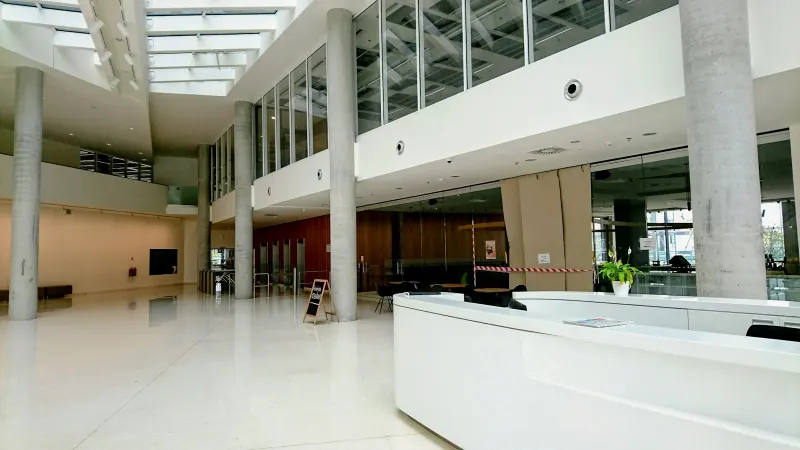

What you can check before you pay
The hospital
- Accreditation
- JCI-accredited, with the certificate number given to you in writing before any deposit.
- Licence
- Turkish Ministry of Health licence, named and verifiable independently rather than described in general terms.
- Intensive care
- On site, in the same building, for every procedure under general anaesthetic. Not "available nearby".
- Anaesthesia
- A consultant anaesthetist present throughout the operation — not supervising several theatres from elsewhere.
- Nursing
- 24-hour nursing, with an English-speaking nurse on each shift and an interpreter for clinical conversations.
Photos are not proof
Photographs show you the rooms; they do not tell you whether there is an intensive care unit behind them. The facility is named to you in writing before you pay, with its licence and accreditation numbers, so you can verify it as well as see it.
If you want to see the building in person, ask — we can usually arrange a visit before you decide, and a provider unwilling to let you look around is telling you something.
How we verify a facility




How is a gastric balloon placed?
Through the mouth during a short endoscopy under light sedation. There are no incisions, no stitches and no scars.
- 1Fasting: nothing to eat or drink from midnight, so the stomach is empty and can be inspected properly.
- 2Sedation: you are given intravenous sedation. You are drowsy and will not remember the procedure, but you are not under general anaesthetic and breathe for yourself.
- 3Diagnostic gastroscopy: a thin camera is passed into the stomach to check for ulcers, a hiatus hernia or inflammation. If something significant is found, the balloon is not placed that day.
- 4Insertion: the deflated balloon, on a thin catheter, is passed down the oesophagus into the stomach.
- 5Filling: it is filled with 400–700 ml of sterile saline tinted with methylene blue. The dye is a safety feature — if the balloon ever leaked, your urine would turn green or blue, giving you clear warning.
- 6Detaching and checking: the catheter is detached and the camera confirms the balloon is correctly positioned and sealed before being withdrawn.
- 7Recovery: you wake within minutes and are observed for a few hours. Cramping and nausea usually begin as the sedation wears off.
A swallowable balloon skips most of this: you swallow a capsule on a thin tube, its position is confirmed on an X-ray, it is filled, and the tube is removed. No sedation, no endoscopy, and it passes naturally about four months later.
Gastric balloon recovery and what the first weeks feel like
The first three to five days are genuinely unpleasant — nausea, cramping and reflux as your stomach adapts. Almost everyone feels normal by the end of week two.
- Days 1–3: nausea, vomiting and cramping are expected, not a complication. You take anti-nausea and anti-acid medication regularly rather than waiting for symptoms.
- Days 3–7: symptoms ease markedly. Clear liquids move to full liquids. Sip constantly — dehydration is the most common reason balloon patients end up needing a drip.
- Week 2: soft food. Most people are back at work and feeling normal.
- Weeks 3–4: normal-texture food in noticeably smaller portions. This is when the balloon starts doing its job properly.
- Months 1–3: the fastest weight loss, typically 60–70% of the total you will lose.
- Months 4–12: loss slows as the stomach adapts around the balloon. This is expected, and it is why the habits you build in the first three months matter so much.
Is it safe to have a gastric balloon in Turkey?
A gastric balloon is the lowest-risk option in weight-loss medicine — no incisions, no general anaesthetic, fully reversible — but it is not risk-free, and the early nausea defeats a small number of patients entirely.
Velsa works with licensed clinics and hospitals in Istanbul, and with gastroenterologists registered with the Turkish Ministry of Health who perform endoscopy routinely. You are given your doctor's name and registration number before you pay anything.
Risks you should know about
- Early intolerance: around 1 in 20 patients cannot tolerate the balloon and need it removed in the first weeks.
- Nausea and vomiting: expected in the first days, and the most common reason for an unplanned return to clinic.
- Dehydration: the practical consequence of persistent vomiting, and occasionally needs intravenous fluids.
- Reflux: new or worsened acid reflux is common and usually controlled with medication.
- Deflation: uncommon, and signalled by blue-green urine thanks to the dye.
- Obstruction: rare but serious — a deflated balloon moving into the intestine. This is why removal on schedule is non-negotiable.
- Gastric ulcer: uncommon, usually from pressure or anti-inflammatory use.
- Weight regain: the most likely outcome of all if eating habits do not change.
Your medical team
Meet your gastric balloon team
You meet your specialist in person before treatment, and they follow your recovery until you are fully healed.
Meet the whole teamFree online consultation
Start your gastric balloon journey
- 1Share your detailsFill in the form in under a minute.
- 2Send your photosYour coordinator tells you which photos we need, via WhatsApp or email.
- 3Receive your planA specialist reviews your case and you get a written, all-inclusive quote.
Can a gastric balloon be combined with other treatments?
It is often combined with gastric botox or with medical weight-loss treatment, and it is frequently used as a bridge to make a larger operation safe.
The balloon's most valuable role is sometimes not as a treatment in its own right but as a step. Patients with a very high BMI are at greater anaesthetic and surgical risk; losing 15–20 kg with a balloon first can move someone from a risky sleeve to a routine one.
Commonly combined with
- Gastric botox: injections into the stomach wall that slow emptying, sometimes used after balloon removal to extend the effect while habits consolidate.
- Medical weight-loss treatment: GLP-1 medication prescribed and monitored by your own doctor can complement the balloon. Velsa does not prescribe it remotely.
- Dietitian and behavioural support: included throughout, and the single factor most associated with keeping the weight off.
Used as a bridge to
- Gastric sleeve or bypass: where a very high BMI makes immediate surgery higher-risk.
- Joint replacement or hernia repair: where a surgeon at home has asked you to lose weight before operating.
- Fertility treatment: where weight is affecting eligibility or outcomes.
How to prepare for your gastric balloon
Fast from midnight before placement, stop anti-inflammatory drugs, clear the first week in your diary, and plan the diet stages before you travel rather than after.
- Fasting: nothing to eat or drink from midnight. The procedure is cancelled if the stomach is not empty.
- Medication: tell your doctor everything you take. Anti-inflammatories and blood thinners usually need pausing, and reflux medication will be started.
- Time off: take the first week easy. Most people are back at work within 7–10 days, but the first three days are genuinely rough.
- Diet plan: get your liquid and soft-food plan from the dietitian before you travel and shop for it in advance. Nobody wants to plan meals while nauseated.
- Removal date: put it in your diary the day the balloon goes in, and book the trip early.
- Packing list: loose clothing, electrolyte sachets, a refillable water bottle and your regular medication in its original packaging.
Gastric balloon results and what happens afterwards
Most patients lose 10–15% of their total body weight, the majority of it in the first three months. What happens in the year after removal depends entirely on what changed in the months before it.
A realistic picture: someone starting at 95 kg would typically expect to lose 10–14 kg over the balloon period. Loss is fastest in the first three months, then slows considerably as the stomach adapts — that plateau is normal and not a sign the balloon has failed.
The honest part is what comes next. The balloon is a window, not a cure: for six or twelve months, eating less is physically easy, and that is the opportunity to rebuild portion sizes, meal timing and activity as habits that survive removal. Patients who do that keep most of the loss. Patients who wait it out regain it. Velsa continues dietitian support for six months past removal for this reason, and our weight-loss before and after gallery deliberately shows patients at removal and twelve months later.
FAQ
Gastric balloon in Turkey: frequently asked questions
At Velsa, £1,800–£2,400 as an all-inclusive package including removal. That covers the endoscopist, sedation, pre-procedure tests, the balloon itself, three hotel nights, transfers, medication and dietitian support throughout the programme. Flights are not included.
Three nights for placement. Removal is a shorter second trip of two nights, or you can arrange it with a gastroenterologist at home — check their price first.
The placement itself is not — you are sedated and will not remember it. The first three to five days afterwards genuinely are uncomfortable, with nausea and cramping as the stomach adapts. You are given medication for both, and it settles.
Typically 10–15% of your total body weight. For someone at 95 kg that is roughly 10–14 kg. Note this is a percentage of total weight, not of excess weight — which is how surgical results are quoted, and why the two numbers are not comparable.
Your stomach returns to its normal capacity and appetite returns. Whether the weight stays off depends entirely on what changed during the programme. Patients who used the window to rebuild portion sizes and activity generally keep most of the loss; those who did not generally regain it.
Yes. Some patients have a second balloon after a break of a month or two, though the effect is usually smaller the second time. It is worth asking honestly whether a different approach would serve you better.
After the first two to three weeks, yes — normal-textured food, but in much smaller portions, and you will feel full quickly. Fizzy drinks and large meals become uncomfortable.
Around one in twenty patients cannot, usually because of persistent vomiting in the first weeks. If symptoms do not settle with medication, the balloon is removed. Contact your coordinator early rather than enduring it.
It is tinted with methylene blue as a safety feature. If the balloon ever leaks, the dye is absorbed and turns your urine green or blue — an unmistakable warning that it must be removed promptly.
It depends on how much you need to lose. A balloon suits a BMI of roughly 27–35 and achieves 10–15% of total body weight, reversibly and without surgery. A sleeve suits a BMI of 35 or more and achieves far more, permanently. If your BMI is over 40, a balloon will not be enough.
No. Removal is a straightforward endoscopic procedure any gastroenterologist can perform, and you go home with documentation of the balloon type and placement date. Removal in Istanbul is included in the Velsa price, so most patients come back for it, but it is your choice.
Yes, and you should. After the first couple of weeks there is no restriction on activity — the balloon is inside the stomach and will not be affected. Building an exercise habit during the programme is one of the better predictors of keeping the weight off afterwards.
Medical disclaimer: This page is for general information only and does not replace a consultation with a qualified surgeon. Prices depend on your individual assessment. Every surgery carries risks, and individual results vary.