

What is a gastric sleeve?
A sleeve gastrectomy permanently removes roughly 80% of the stomach, including the section that produces most of the body's hunger hormone. What remains is a narrow tube about the size and shape of a banana.
The operation is done through four or five keyhole incisions under general anaesthetic and takes one to two hours. The surgeon divides the stomach vertically with a stapling device and removes the larger, curved portion entirely. Nothing is rerouted and no implant is left behind — the digestive tract works in the same order as before, just with a much smaller reservoir.
Two things drive the weight loss. The obvious one is volume: the new stomach holds roughly 100–150 ml, so you feel full after a few mouthfuls. The less obvious and arguably more important one is hormonal. The removed section, the fundus, produces most of your ghrelin, so appetite itself drops rather than simply being overruled.
How it compares with the alternatives
| Procedure | Reversible | Typical excess weight loss | Hospital nights |
|---|---|---|---|
| Gastric sleeve | No | 60–70% | 3 |
| Gastric bypass | No | 65–80% | 3 |
| Mini gastric bypass | Technically yes | 65–80% | 3 |
| Gastric balloon | Yes, removed at 6–12 months | 10–15% | Day case |
| Gastric botox | Yes, wears off at 4–6 months | 5–10% | Day case |
The sleeve has become the most performed bariatric operation in the world because it balances strong, durable weight loss against a lower complication rate than a bypass, and because it leaves the small intestine untouched — so vitamin absorption is much less affected. If you are weighing it against a bypass, our guide to gastric sleeve versus gastric bypass sets out the trade-offs in detail.
What it does for health, not just weight
- Type 2 diabetes: improves in most patients and goes into remission in a substantial proportion, often within weeks and before much weight is lost.
- High blood pressure: improves or resolves in roughly half of patients.
- Sleep apnoea: frequently resolves as weight comes off.
- Joint pain and mobility: usually improve markedly.
- Fertility: often improves in women with PCOS — which is why contraception matters for the first 18 months.
The three bariatric operations compared
Gastric sleeve
About 80% of the stomach is removed, leaving a narrow tube
Gastric bypass
A small pouch is joined straight to the small bowel
Mini gastric bypass
A longer pouch and a single join — technically simpler
How much does a gastric sleeve cost in Turkey?
A Velsa all-inclusive gastric sleeve package in Istanbul costs £2,900–£3,800. The same operation privately in the UK is typically £10,000–£14,000, and in the United States $17,000–$25,000.
| Procedure | Price (GBP) | Hospital nights | Nights in Turkey |
|---|---|---|---|
| Gastric sleeve | £2,900–£3,800 | 3 | 7 |
| Gastric bypass | £3,400–£4,300 | 3 | 7 |
| Mini gastric bypass | £3,200–£4,000 | 3 | 7 |
| Revision surgery (sleeve to bypass) | £4,200–£5,400 | 3–4 | 8 |
| Gastric balloon | £1,800–£2,400 | Day case | 3 |
What the package includes
- Bariatric surgeon and anaesthetist fees
- Three nights in a JCI-accredited private hospital
- All pre-operative blood tests, endoscopy and scans
- Leak test performed during the operation
- Four nights in a four-star hotel with breakfast
- All airport, hotel and hospital transfers
- A personal English-speaking coordinator
- Dietitian consultations before and after surgery
- Twelve months of structured dietitian follow-up
- Vitamin and supplement starter pack
What is not included
Flights are excluded so you can choose your own route and fare. Also excluded: travel insurance that covers bariatric surgery abroad, meals beyond hotel breakfast, your ongoing vitamin supply after the starter pack, and any treatment for a pre-existing condition found during your work-up. There are no consultation fees at any stage.
What it costs elsewhere
£2,900–£3,800
All-inclusive with Velsa: surgeon, hospital, hotel, transfers and twelve months of aftercare
£7,800+
Typical saving against the UK, mid-range against mid-range, before flights
70%
Less than the typical UK price
Bars span the usual range in each market, not a single quoted figure. Non-Turkish figures are indicative market ranges rather than quotes from named providers.
US and UK figures are typically the surgeon and facility only. Flights, accommodation, transfers and follow-up are extra in those markets and included in the Velsa price, which is the comparison that actually matters.
Your own price comes from a written quote after a clinician has reviewed your case. Nothing on this chart is a quote.
Why do patients from the UK, US and Europe choose Turkey?
Patients choose Turkey for lower all-inclusive prices, experienced bariatric surgeons who operate at high volume, modern private hospitals, short waiting times and easy direct flights from most European and many US cities.
Turkey has become one of the world's leading medical travel destinations. According to Turkish industry figures reported in July 2026, the country welcomed around 1.4 million health tourists in 2025, generating over $3 billion in revenue. Weight-loss surgery is one of the fastest-growing categories.
- Value: lower operating and living costs mean you pay less for the same type of surgery and hospital care.
- Experience: leading bariatric surgeons in Istanbul operate every week.
- Speed: consultations can be arranged online within days, and surgery dates are flexible.
- Access: most UK and European airports have direct flights of around 3–4 hours.
- Recovery comfort: you recover in a hotel with a coordinator on hand, rather than managing alone at home.
Every Velsa quote names the bariatric surgeon and the hospital before you pay, so you can check both yourself.
Am I a good candidate for a gastric sleeve?
The usual criteria are a BMI of 40 or above, or a BMI of 35 or above with a weight-related condition such as type 2 diabetes, sleep apnoea or high blood pressure — plus a genuine readiness to change how you eat, permanently.
A gastric sleeve is usually suitable if
- Your BMI is 40 or more, or 35 or more with an obesity-related health condition.
- You have tried to lose weight through diet, exercise or medication without lasting success.
- You are between 18 and 65. Outside that range it is still possible but needs closer assessment.
- You are prepared to take vitamin supplements and attend follow-up for life.
- You can commit to the staged diet: liquids, then purée, then soft food, over about six weeks.
- You understand this is a permanent change to your anatomy that cannot be reversed.
You may need to wait, or consider something else
- Your BMI is under 32 and you have no weight-related condition: a gastric balloon or medical treatment may suit you better.
- You have severe, untreated acid reflux or a large hiatus hernia. A sleeve commonly worsens reflux — a bypass is usually preferred.
- You have an untreated eating disorder or an unmanaged mental health condition.
- You have an active alcohol or substance dependency.
- You are pregnant, or planning a pregnancy within the next 18 months.
Our BMI and eligibility calculator tells you in a minute where you sit against the standard criteria, and a bariatric surgeon reviews your details free of charge before you commit to anything.
1-minute self-check
Am I a good candidate for a gastric sleeve?
Answer 7 quick questions to see if a gastric sleeve could be right for you. No personal details needed to see your result.
Your gastric sleeve journey in Turkey, day by day
Seven nights in Istanbul: three in hospital and four in the hotel, so your surgeon can see you through the window when complications appear.
- 1Before you travel: you complete a medical questionnaire and send recent blood results. A bariatric surgeon and a dietitian review them, confirm you meet the criteria, and you receive a written fixed quote. You start the two-week pre-operative liver-shrinking diet at home.
- 2Day 1 — arrival: your driver meets you at Istanbul airport and takes you to the hotel. Rest after the flight.
- 3Day 2 — assessment: blood tests, ECG, chest X-ray, abdominal ultrasound and an endoscopy, followed by consultations with your surgeon, the anaesthetist and the dietitian. You are admitted to hospital in the evening.
- 4Day 3 — surgery: the operation takes one to two hours. You wake in your room, and you will be asked to stand and walk the same evening — this matters more than it sounds, because walking is what prevents blood clots.
- 5Day 4 — leak test and first liquids: a swallow test confirms the staple line is sealed, after which you begin sips of water and clear liquids.
- 6Day 5 — discharge: you move to the hotel, walking regularly and managing your liquid diet with your coordinator checking in daily.
- 7Days 6 and 7 — recovery in the hotel: light activity. Your coordinator is on WhatsApp at any hour, and the hospital is fifteen minutes away if anything concerns you.
- 8Day 8 — final check and fly home: bloods repeated, your surgeon confirms you are fit to fly, and you leave with your discharge summary, medication, supplements and a written diet plan.
- 9After you are home: dietitian appointments at 2 weeks, 1, 3, 6 and 12 months, with your surgeon available throughout.
Where you will be cared for
Our partner hospital and hotel
See where you will have your surgery and where you will recover, before you travel.


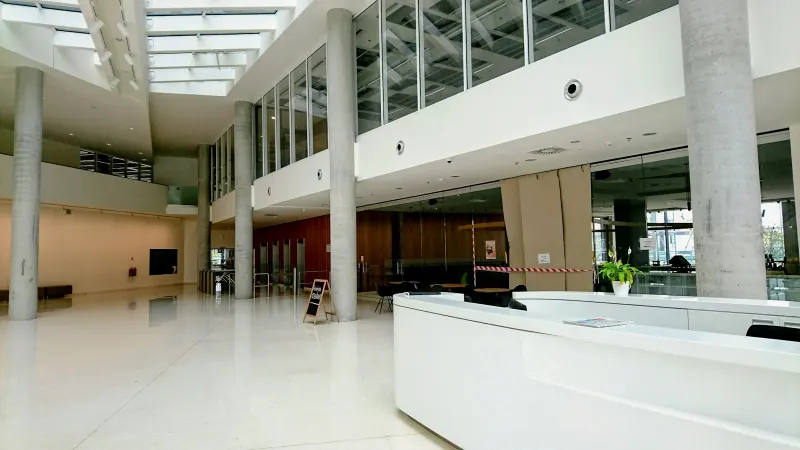

What you can check before you pay
The hospital
- Accreditation
- JCI-accredited, with the certificate number given to you in writing before any deposit.
- Licence
- Turkish Ministry of Health licence, named and verifiable independently rather than described in general terms.
- Intensive care
- On site, in the same building, for every procedure under general anaesthetic. Not "available nearby".
- Anaesthesia
- A consultant anaesthetist present throughout the operation — not supervising several theatres from elsewhere.
- Nursing
- 24-hour nursing, with an English-speaking nurse on each shift and an interpreter for clinical conversations.
Photos are not proof
Photographs show you the rooms; they do not tell you whether there is an intensive care unit behind them. The facility is named to you in writing before you pay, with its licence and accreditation numbers, so you can verify it as well as see it.
If you want to see the building in person, ask — we can usually arrange a visit before you decide, and a provider unwilling to let you look around is telling you something.
How we verify a facility




How is a gastric sleeve performed?
Keyhole surgery under general anaesthetic, taking one to two hours, through four or five small incisions in the abdomen.
- 1Anaesthetic: a consultant anaesthetist puts you to sleep. A breathing tube is placed and you are monitored throughout.
- 2Access: four or five incisions of 5–12 mm are made across the upper abdomen. Carbon dioxide gas is used to lift the abdominal wall and create working space.
- 3Freeing the stomach: the surgeon separates the greater curvature of the stomach from its blood supply and surrounding attachments.
- 4Sizing: a calibration tube, usually 36–40 French, is passed into the stomach. The new sleeve is shaped around it so the diameter is consistent and reproducible rather than guessed.
- 5Stapling: a surgical stapler divides the stomach vertically from near the pylorus up to the angle of His, firing several rows of staples that seal as they cut.
- 6Reinforcing and testing: the staple line is checked and often oversewn or reinforced. A leak test — with methylene blue dye or air under saline — confirms the seal before closing.
- 7Removing the stomach: the excised portion, about 80% of the original volume, is taken out through one of the incisions. It is not reversible.
- 8Closing: the incisions are closed with dissolving sutures. A drain is sometimes left for 24–48 hours.
Gastric sleeve recovery timeline
Expect two to three weeks before you are back at a desk, six weeks before heavy activity, and about six weeks of staged diet before you return to normal-texture food in much smaller amounts.
The physical recovery
- Days 1–3: discomfort at the incision sites and shoulder-tip pain from the gas, which is normal and passes. You walk from the first evening.
- Week 1: tiredness is the dominant feeling. You are on clear liquids only, taking small sips constantly to stay hydrated.
- Weeks 2–3: energy returns and most patients are back at a desk job. No lifting over 5 kg.
- Weeks 4–6: light exercise such as walking and swimming once the wounds are fully healed. Still no heavy lifting or core work.
- Week 6 onwards: full activity, including the gym, with your surgeon's approval.
The diet stages
- Stage 1 — clear liquids, weeks 1–2: water, broth, diluted juice. The goal is hydration, not nutrition.
- Stage 2 — full liquids and purée, weeks 2–4: soups, yoghurt, protein shakes. Protein becomes the priority and stays there.
- Stage 3 — soft food, weeks 4–6: scrambled egg, flaked fish, soft vegetables. Chew far more than feels necessary.
- Stage 4 — normal texture, week 6 onwards: regular food in portions of roughly 100–150 ml. Protein first, every meal, for life.
Is it safe to have a gastric sleeve in Turkey?
A gastric sleeve is major abdominal surgery. In experienced hands the mortality rate is around 0.1–0.2% — comparable to a gallbladder removal — but the complications, while uncommon, are serious.
Velsa works only with JCI-accredited private hospitals in Istanbul that run a dedicated bariatric programme, with intensive care on site, and with surgeons registered with the Turkish Ministry of Health who perform this operation routinely. You are given your surgeon's name and registration number before you pay anything.
Risks you should know about
- Staple line leak: the most serious complication, affecting around 1–2%. Usually appears between days 3 and 7 and may need further surgery.
- Bleeding: uncommon, occasionally requiring a transfusion or a return to theatre.
- Blood clots: the reason for injections, stockings and early walking.
- Acid reflux: new or worsened reflux affects a significant minority, and in some cases later needs conversion to a bypass.
- Stricture: narrowing of the sleeve, causing vomiting; usually treated endoscopically.
- Nutritional deficiency: B12, iron, vitamin D and folate. Lifelong supplements and annual blood tests are required.
- Gallstones: more likely with rapid weight loss; some patients later need their gallbladder removed.
- Loose skin: common after substantial loss, and often the reason patients later consider body-contouring surgery.
Tell your GP you are having this surgery abroad, before you travel. A discharge summary and a GP who knows what was done makes any aftercare at home vastly easier — Velsa provides the paperwork in English.
Your medical team
Meet your gastric sleeve team
You meet your specialist in person before treatment, and they follow your recovery until you are fully healed.
Meet the whole teamFree online consultation
Start your gastric sleeve journey
- 1Share your detailsFill in the form in under a minute.
- 2Send your photosYour coordinator tells you which photos we need, via WhatsApp or email.
- 3Receive your planA specialist reviews your case and you get a written, all-inclusive quote.
Can a gastric sleeve be combined with other procedures?
A gallbladder or hiatus hernia repair can be done in the same operation where there is a clinical reason. Cosmetic body contouring is a separate trip, 12 to 18 months later.
Your surgeon will only add a second procedure where it is clinically justified, because extending the operating time in bariatric surgery raises the risk of clots and wound problems in patients who are already at higher risk.
Sometimes done at the same time
- Hiatus hernia repair: common, and recommended where a hernia is found, because leaving it untreated makes post-sleeve reflux considerably worse.
- Gallbladder removal: if you already have symptomatic gallstones. Many surgeons prefer to wait and see, since not everyone develops problems.
Planned for later, usually 12–18 months on
- Tummy tuck: the most common follow-up, once your weight has been stable for at least six months.
- Body lift after weight loss: for patients with loose skin across the abdomen, back and thighs.
- Arm lift and thigh lift: frequently wanted after large weight loss.
- Breast lift: breast volume and position change substantially after significant weight loss.
Do not book body contouring at the same time as your sleeve. Operating before your weight has stabilised produces a result that will not hold, and combining major abdominal surgery with major skin surgery is not safe.
How to prepare for your gastric sleeve
Follow the two-week liver-shrinking diet, stop smoking, arrange your blood tests, organise help at home for the first fortnight, and get your GP involved before you travel.
- Liver-shrinking diet: two weeks of a low-carbohydrate, high-protein diet before surgery. This genuinely matters — a smaller liver makes keyhole access safer, and surgeons do cancel operations when it has been skipped.
- Medication: tell your surgeon everything you take. Blood thinners, anti-inflammatories and diabetes medication all need a plan, and insulin doses usually change rapidly after surgery.
- Smoking: stop at least four weeks before. Nicotine significantly increases the risk of a staple line leak and ulcers.
- Time off: plan 2–3 weeks away from work, and 6 weeks away from heavy lifting and strenuous exercise.
- Your GP: tell them before you go, and arrange follow-up blood tests for 3, 6 and 12 months.
- Packing list: loose clothing with no waistband pressure, slip-on shoes, compression stockings, a refillable water bottle, and your medication in its original packaging.
Gastric sleeve results and what to expect long term
Most patients lose 60–70% of their excess weight within 12 to 18 months. The weight comes off fastest in the first six months, and what happens after year two depends almost entirely on habits rather than on the operation.
A realistic picture: someone starting at 130 kg with an ideal weight around 70 kg has 60 kg of excess weight, and would typically expect to lose 36–42 kg. Most of that happens in the first six to nine months. A small regain of 5–10% between years two and five is common and is not a failure — it is the normal shape of the curve.
The patients who keep the weight off are, without exception, the ones who kept going to follow-up. Protein at every meal, separating drinking from eating, lifelong supplements and regular blood tests are what hold the result. Velsa includes twelve months of structured dietitian support for exactly this reason, and loose skin — the most common complaint after large weight loss — is addressed in our before and after gallery, where consented cases show results at 12 and 24 months.
FAQ
Gastric sleeve in Turkey: frequently asked questions
At Velsa, £2,900–£3,800 as an all-inclusive package. That covers the bariatric surgeon, anaesthetist, three nights in a JCI-accredited hospital, all pre-operative tests including endoscopy, four hotel nights, transfers, and twelve months of dietitian follow-up. Flights are not included.
Seven nights. Three in hospital and four in the hotel. The reason is specific: a staple line leak usually appears between days three and seven, so you should still be in Istanbul during that window.
The standard criteria are a BMI of 40 or above, or 35 or above with a weight-related condition such as type 2 diabetes, sleep apnoea or high blood pressure. Some patients with a BMI of 32–35 and significant comorbidities are considered on an individual basis.
Most patients lose 60–70% of their excess weight within 12 to 18 months — not 60–70% of their total body weight. If you weigh 130 kg with an ideal weight of 70 kg, expect to lose roughly 36–42 kg.
No. About 80% of the stomach is removed and cannot be restored. It can be converted to a gastric bypass later if reflux becomes a problem or weight loss is inadequate, but the removed stomach is gone permanently.
Yes. A multivitamin, B12, iron, vitamin D and calcium are standard, and you need annual blood tests to check levels. The sleeve affects absorption less than a bypass, but it does not leave it untouched.
Most patients who lose a large amount of weight have some loose skin, particularly on the abdomen, arms and thighs. How much depends on your age, starting weight and skin quality. Body contouring surgery is possible once your weight has been stable for six months, usually 12 to 18 months after the sleeve.
Yes, and fertility often improves — which catches some patients out. Surgeons advise waiting at least 12 to 18 months, until your weight is stable and your nutrition is good, and using reliable contraception in the meantime.
It usually changes quickly. Many patients with type 2 diabetes need far less medication within days, before meaningful weight loss has happened, because of the hormonal effect. This must be managed by your doctor — do not adjust insulin yourself.
You will eat normal-textured food from about six weeks, but in portions of roughly 100–150 ml, and protein always comes first. Fizzy drinks, large meals and drinking while eating stop being comfortable. Most patients describe it as a permanent change in appetite rather than a diet they are following.
Contact your coordinator at any hour. You go home with a full discharge summary in English for your GP, and Velsa liaises with your surgeon directly. If a complication relates to the surgery, the aftercare terms in your written quote set out what is covered, including a return to Istanbul where that is clinically appropriate.
Broadly: the sleeve is simpler, keeps the intestine untouched and affects vitamin absorption less. The bypass gives slightly more weight loss, is better for severe reflux and is more effective for type 2 diabetes. Severe reflux usually points away from a sleeve. Your surgeon will recommend based on your history, and our detailed comparison sets out the trade-offs.
Medical disclaimer: This page is for general information only and does not replace a consultation with a qualified surgeon. Prices depend on your individual assessment. Every surgery carries risks, and individual results vary.