

What is a bone graft or sinus lift?
A bone graft adds material to the jaw so that bone grows into it and creates enough volume to hold an implant. A sinus lift is a specific graft in the upper back jaw, where the floor of the maxillary sinus is raised to make room.
Jawbone exists to support teeth. When a tooth is lost the bone that held it has nothing to do, and it resorbs — losing up to a quarter of its width within the first year and continuing slowly after that. This is why someone missing a molar for fifteen years often has a ridge too narrow to take an implant, and why long-term denture wearers develop a flattened jaw and a sunken lower face.
In the upper back jaw there is a second problem. The maxillary sinus sits directly above the molar roots, and when those teeth go, the sinus floor tends to drop into the space. The result is a ridge with adequate width but almost no height — sometimes only two or three millimetres between the gum and the sinus, where an implant needs eight or more.
The graft materials
| Type | Source | Integration | Typical use |
|---|---|---|---|
| Autograft | Your own bone, usually the jaw | Fastest and most predictable | Larger defects |
| Xenograft | Processed bovine bone | Slow, acts as a scaffold | Most common, sinus lifts |
| Allograft | Processed human donor bone | Moderate | Ridge augmentation |
| Alloplast | Synthetic, e.g. beta-TCP | Resorbs as bone replaces it | Socket preservation |
Xenograft granules — most commonly processed bovine bone — are the workhorse of implant dentistry. They are sterilised to remove all organic material, leaving a mineral scaffold that your own bone grows through and gradually replaces. They do not transmit disease and have decades of clinical use behind them.
Closed and open sinus lifts
- Closed (crestal) sinus lift: done through the implant channel itself. The sinus membrane is gently pushed up a few millimetres and graft material packed beneath it. Suitable when you have at least 5–6 mm of existing bone height, and the implant goes in the same day.
- Open (lateral window) sinus lift: a small window is made in the side wall of the jaw, the membrane lifted under direct vision and a larger volume of graft placed. Needed when less than 5 mm of bone remains, and the implant is usually placed six to nine months later.
Why a graft is sometimes needed first
Not enough bone
Bone shrinks after a tooth is lost, and an implant needs something to hold
Graft or sinus lift
Bone material is packed in, or the sinus floor is raised to make room
Then the implant
Three to six months later, once the graft has become your own bone
How much does bone grafting cost in Turkey?
Velsa charges £180–£850 depending on the technique and the volume of graft needed. The UK equivalent is typically £400–£2,500.
| Procedure | Price (GBP) | Healing before implant | Nights in Turkey |
|---|---|---|---|
| Socket preservation, per site | £180–£260 | Implant at 3–4 months | 4 |
| Minor ridge graft, per site | £220–£320 | Implant same day | 5 |
| Major ridge augmentation | £450–£700 | 6–9 months | 5 |
| Closed sinus lift | £350–£550 | Implant same day | 5 |
| Open sinus lift, lateral window | £550–£850 | 6–9 months | 5 |
What the package includes
- Examination, panoramic X-ray and 3D CBCT scan
- The grafting procedure under local anaesthetic
- Graft material and resorbable membrane
- Any sutures and dressings
- Four nights in a four-star hotel with breakfast
- All airport, hotel and clinic transfers
- A personal English-speaking coordinator
- Antibiotics and antibacterial mouthwash
- A review appointment before you fly home
- Follow-up radiograph at the next trip
How it affects the implant timeline
A minor graft or closed sinus lift is done at the same appointment as the implant and adds nothing to the schedule — just to the cost. A major ridge augmentation or open sinus lift needs six to nine months of healing before the implant can go in, which turns a two-trip implant plan into a three-trip one. This is worth knowing before you book flights.
What it costs elsewhere
£180–£850
All-inclusive with Velsa: surgeon, hospital, hotel, transfers and twelve months of aftercare
£1,500+
Typical saving against the UK, mid-range against mid-range, before flights
74%
Less than the typical UK price
Bars span the usual range in each market, not a single quoted figure. Non-Turkish figures are indicative market ranges rather than quotes from named providers.
US and UK figures are typically the surgeon and facility only. Flights, accommodation, transfers and follow-up are extra in those markets and included in the Velsa price, which is the comparison that actually matters.
Your own price comes from a written quote after a clinician has reviewed your case. Nothing on this chart is a quote.
Why do patients from the UK, US and Europe choose Turkey?
Patients choose Turkey for lower all-inclusive prices, experienced cosmetic dentists working with their own laboratories, modern private clinics, short waiting times and easy direct flights from most European and many US cities.
Turkey has become one of the world's leading medical travel destinations. According to Turkish industry figures reported in July 2026, the country welcomed around 1.4 million health tourists in 2025, generating over $3 billion in revenue. Cosmetic and implant dentistry is one of the most requested categories.
- Value: lower operating and living costs mean you pay less for the same standard of treatment.
- Experience: leading dental clinics in Istanbul complete cosmetic and implant cases every week.
- Speed: consultations can be arranged online within days, and treatment dates are flexible.
- Access: most UK and European airports have direct flights of around 3–4 hours.
- Recovery comfort: you recover in a hotel with a coordinator on hand, rather than managing alone at home.
Every Velsa quote names the dentist, the clinic and the laboratory before you pay, so you can check all three yourself.
Do I need a bone graft?
You need one if your CBCT scan shows insufficient bone height or width to hold an implant safely. The longer a tooth has been missing, the more likely it is.
A graft is commonly needed if
- You have been missing the tooth for several years and the ridge has narrowed.
- You are having an upper back tooth replaced, where the sinus has dropped.
- The tooth was lost to infection or gum disease, which destroys surrounding bone.
- You have worn a denture for a long time, which accelerates resorption.
- A tooth is being extracted now and you want to preserve the socket for a future implant.
- A previous implant failed and left a defect behind.
Grafting may need to wait, or another plan may suit
- You smoke heavily: graft failure rates rise substantially, and most surgeons will not proceed.
- You have untreated gum disease or active infection at the site.
- You have chronic sinusitis or nasal polyps, which must be managed before a sinus lift.
- You take bisphosphonates, which carries a risk of jaw necrosis and needs specialist assessment.
- You have had radiotherapy to the jaw.
- Your bone loss is extensive enough that a shorter implant, an angled one or All-on-4 would avoid grafting altogether.
Our self-check below gives you a starting answer, and a Velsa implantologist reviews your panoramic X-ray free of charge — though only a CBCT scan can confirm the final answer.
1-minute self-check
Am I likely to need a bone graft?
Answer 6 quick questions to see how likely it is that implants in your case would need bone grafting first. No personal details needed to see your result.
Your bone graft or sinus lift, step by step
Usually four nights in Istanbul, combined with implant placement. A major graft means the implant comes at a later trip.
- 1Before you travel: you send a recent panoramic X-ray. An implantologist gives a provisional view on whether grafting is likely, and quotes the implant work with grafting shown as a separate contingency.
- 2Day 1 — arrival: your driver meets you at Istanbul airport and takes you to the hotel.
- 3Day 2 — CBCT scan and planning: the 3D scan measures bone height and width in millimetres. Your surgeon shows you the measurements and confirms whether grafting is needed, which technique, and the cost — in writing, before proceeding.
- 4Day 3 — surgery: the graft is placed under local anaesthetic, with sedation available. Where bone volume allows, the implant goes in at the same appointment.
- 5Day 4 — review: swelling peaks. The site is checked and any dressing changed.
- 6Day 5 — fly home with antibiotics, antibacterial mouthwash and written aftercare.
- 7At home, months 3–9 — healing: your own bone grows into the graft scaffold. Nothing visible happens. Monthly coordinator check-ins.
- 8Next trip — the implant, or the crown: if the implant went in with the graft, the next trip fits the crown. If the graft was major, the next trip places the implant and a third fits the crown.
Where you will be cared for
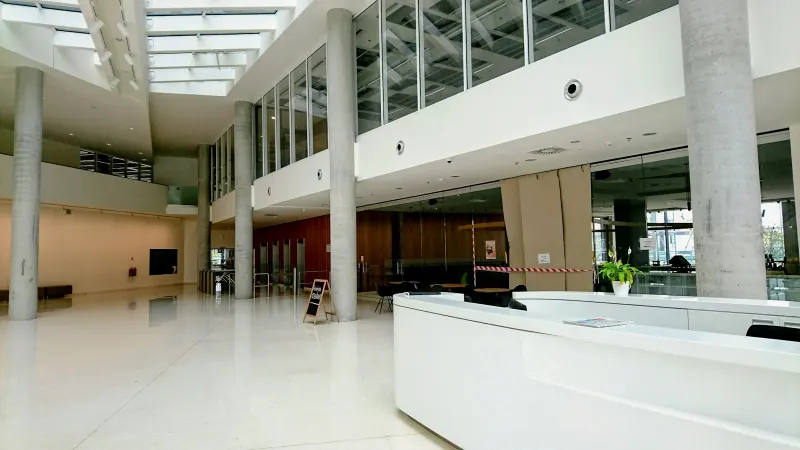
Our partner hospital and hotel
See where you will have your surgery and where you will recover, before you travel.



What you can check before you pay
The hospital
- Accreditation
- JCI-accredited, with the certificate number given to you in writing before any deposit.
- Licence
- Turkish Ministry of Health licence, named and verifiable independently rather than described in general terms.
- Intensive care
- On site, in the same building, for every procedure under general anaesthetic. Not "available nearby".
- Anaesthesia
- A consultant anaesthetist present throughout the operation — not supervising several theatres from elsewhere.
- Nursing
- 24-hour nursing, with an English-speaking nurse on each shift and an interpreter for clinical conversations.
Photos are not proof
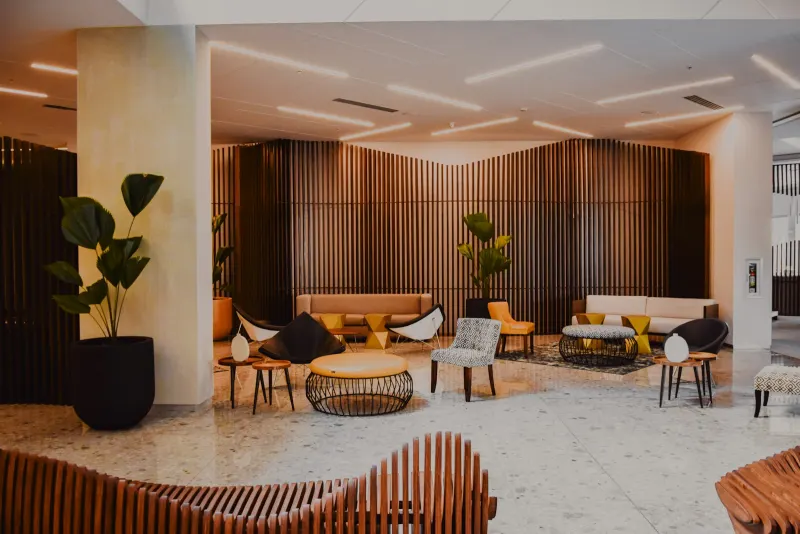
Photographs show you the rooms; they do not tell you whether there is an intensive care unit behind them. The facility is named to you in writing before you pay, with its licence and accreditation numbers, so you can verify it as well as see it.
If you want to see the building in person, ask — we can usually arrange a visit before you decide, and a provider unwilling to let you look around is telling you something.
How we verify a facility



How is a bone graft or sinus lift performed?
Thirty to ninety minutes under local anaesthetic, with sedation available. Nothing is taken from your hip — jaw grafting uses either local bone or processed granules.
- 1CBCT planning: the scan measures available bone in three dimensions and maps the sinus floor and nerve canal. The graft volume is planned from it.
- 2Anaesthetic: local anaesthetic numbs the area. Intravenous sedation is available for larger grafts or anxious patients.
- 3Access: a small flap of gum is lifted to expose the bone ridge. For a lateral sinus lift, a window is created in the side wall of the jaw with a piezoelectric instrument, which cuts bone without damaging soft tissue.
- 4Lifting the membrane: in a sinus lift, the Schneiderian membrane lining the sinus is gently elevated away from the bone. This step is the delicate one — perforating the membrane is the commonest complication.
- 5Placing the graft: granules are packed into the space, or against the ridge, to the planned volume. Some surgeons mix the granules with your own blood concentrate to improve handling and healing.
- 6Membrane and closure: a resorbable collagen membrane is laid over the graft to stop gum tissue growing into it, then the flap is sutured closed without tension.
- 7The implant, where possible: if enough native bone remains for primary stability, the implant is placed in the same sitting and heals alongside the graft.
- 8Healing: three to nine months depending on the volume placed, during which your own bone replaces the scaffold.
Bone graft and sinus lift recovery timeline
Expect swelling and discomfort for five to seven days, with a longer list of restrictions after a sinus lift. Bone healing itself takes three to nine months and is invisible.
- Days 1–3: swelling and bruising peak around day two, often more than patients expect. Ice, prescribed painkillers and antibiotics.
- Days 3–7: swelling subsides. Soft, cool food. Rinse gently with the prescribed mouthwash rather than brushing over the site.
- Week 1–2: sutures dissolve or are removed. Most patients are comfortable and back to normal activity.
- Weeks 2–6: the gum has healed over. Avoid chewing directly on the site.
- Months 3–9: bone integration. Nothing is visible and nothing can accelerate it. A radiograph at the next trip confirms it has worked.
Is bone grafting in Turkey safe?
Bone grafting is routine, well-documented surgery with success rates above 90% in healthy non-smokers. Sinus lifts carry one specific complication the ridge grafts do not: membrane perforation.
Velsa works with licensed dental clinics in Istanbul whose implantologists are registered with the Turkish Ministry of Health, with in-house CBCT scanning. Graft materials are CE-marked and traceable, and the batch details go into your records.
Risks you should know about
- Graft failure: the material does not integrate and must be removed, with a second attempt months later. Under 10% in healthy non-smokers.
- Sinus membrane perforation: the commonest sinus lift complication. Small tears are repaired with a collagen patch during surgery; large ones mean abandoning and rescheduling.
- Sinusitis: infection of the sinus after a lift, treated with antibiotics and decongestants.
- Graft migration: material displaced into the sinus, usually from nose blowing too early.
- Infection: at the graft site, treated with antibiotics and occasionally removal.
- Swelling and bruising: expected rather than complications, and often marked.
- Nerve injury: in the lower jaw, numbness of the lip and chin. Rare with proper CBCT planning.
- Wound breakdown: the flap opens and exposes the graft, usually because it was closed under tension or the patient smoked.
If you have a history of sinus problems, tell your surgeon before a sinus lift. Chronic sinusitis or polyps should be managed by an ENT specialist first — grafting into an inflamed sinus is asking for trouble.
Your medical team
Meet your bone grafting team
You meet your specialist in person before treatment, and they follow your recovery until you are fully healed.
Meet the whole teamFree online consultation
Start your bone grafting journey
- 1Share your detailsFill in the form in under a minute.
- 2Send your photosYour coordinator tells you which photos we need, via WhatsApp or email.
- 3Receive your planA specialist reviews your case and you get a written, all-inclusive quote.
Can grafting be combined with other treatment?
It almost always is. Grafting is rarely a treatment in its own right — it is the step that makes an implant possible.
Whether the graft and the implant happen together depends on one thing: whether enough native bone remains to hold the implant steady while everything heals. Your CBCT scan answers that question.
Commonly combined with
- Implant placement: where primary stability can be achieved, the implant goes in with the graft and they heal together. This is the preferred route and saves a trip.
- Extraction and socket preservation: grafting the socket immediately after a tooth comes out preserves the ridge and makes a future implant far simpler.
- Multiple implants: several sites are usually grafted in one sitting rather than spread across trips.
- All-on-4 or All-on-6: a sinus lift is sometimes needed in the upper jaw to make six implants possible. See All-on-6.
How grafting can sometimes be avoided
- Short implants: modern 6–8 mm implants can work where longer ones would need a lift.
- Angled implants: tilting the implant to engage available bone, which is the principle behind All-on-4.
- Narrow-diameter implants: for a thin ridge where width is the limiting factor.
Ask your implantologist whether any of these would avoid a graft in your case. A good one will have considered them already, and will explain why they chose grafting if they did.
How to prepare for bone grafting
Stop smoking, treat any sinus or gum problems first, declare your medication, and budget for the possibility that grafting adds a trip.
- Smoking: stop at least four weeks before and four weeks after. This affects graft success more than anything else within your control.
- Sinus health: if you have chronic sinusitis, nasal polyps or frequent sinus infections, see an ENT specialist before a sinus lift is planned.
- Gum health: have a hygienist appointment at home. Grafting next to inflamed gums raises the infection risk.
- Medication: declare blood thinners and especially bisphosphonates, which need specialist assessment before any jaw surgery.
- Plan for the timeline: ask whether your graft will allow the implant at the same appointment. If not, budget for an extra trip and three to nine months.
- Packing list: soft foods, a decongestant if you are prone to congestion, and your regular medication.
Bone graft results and success rates
Success rates are above 90% in healthy non-smokers, and a successful graft is permanent — your own bone replaces the scaffold and behaves like the bone around it.
The result is not something you see in a mirror. It is visible on a radiograph as new bone density where there was none, and its real success is measured by whether the implant placed into it is stable at the three-month check and still stable a decade later. Grafted bone, once integrated and loaded by an implant, maintains itself in the same way native bone does.
The main threat afterwards is the same one that caused the problem in the first place. Gum disease destroys bone around implants exactly as it does around teeth, so hygienist visits twice a year and daily cleaning around every implant are what protect the investment. As consented cases are added, our dental before and after gallery shows pre- and post-graft radiographs.
FAQ
Bone grafting in Turkey: frequently asked questions
At Velsa, £180–£260 for socket preservation, £220–£320 for a minor ridge graft, £350–£550 for a closed sinus lift and £550–£850 for an open sinus lift. The UK equivalent is typically £400–£2,500. It is quoted as a separate line after your CBCT scan, so you can see exactly what changed.
Only your CBCT scan can say. A panoramic X-ray is flat and cannot show bone width. Ask to see the scan and have the height and width shown to you in millimetres — a reasonable implantologist will do this without being asked.
No. Jaw grafting uses either a small amount of bone harvested locally from the jaw itself, or processed granules. Hip harvesting is reserved for major reconstructive surgery and is not part of routine implant dentistry.
Most commonly processed bovine bone, sterilised to remove all organic material and leaving only a mineral scaffold that your own bone grows through. Synthetic and human donor materials are also used. All are CE-marked and traceable.
A minor graft or closed sinus lift is done at the same appointment as the implant and adds nothing to the timeline. A major ridge augmentation or open sinus lift needs six to nine months of healing first, which usually adds a trip.
It is routine surgery with a high success rate, but it has one specific complication: perforating the sinus membrane. Small tears are repaired during surgery with a collagen patch; large ones mean stopping and rescheduling. Experienced hands and a CBCT scan make it unlikely.
The surgery is done under local anaesthetic, so you should feel pressure rather than pain. Afterwards expect swelling and soreness for five to seven days, often more swelling than patients anticipate. Prescribed painkillers manage it.
Because pressure changes can push graft material up through the lifted membrane before it has stabilised. For two weeks: no nose blowing, sneeze with your mouth open, no straws and no smoking. It matters more than it sounds.
It is removed, the site allowed to heal for a few months, and a second attempt made — usually successfully. Failure is under 10% in healthy non-smokers and much higher in smokers, which is why the smoking advice is not a formality.
Sometimes. Short implants, narrow-diameter implants or angled placement can work where bone is limited — the angled approach is the whole principle behind All-on-4. Ask your implantologist whether any of these apply to your case.
Yes. Once your own bone has replaced the scaffold and an implant is loading it, grafted bone maintains itself like native bone. What threatens it afterwards is gum disease, exactly as with natural teeth.
Velsa schedules your flight for day five. Flying earlier is best avoided because cabin pressure changes act on a freshly lifted sinus membrane. Tell your coordinator if your flight home is unusually long or involves several sectors.
Medical disclaimer: This page is for general information only and does not replace a consultation with a qualified surgeon. Prices depend on your individual assessment. Every surgery carries risks, and individual results vary.