

What is PRP hair therapy?
Platelet-rich plasma is made from your own blood. A sample is spun in a centrifuge to separate the platelet-rich fraction, which is then injected into the scalp, where the growth factors platelets carry stimulate follicles that are still alive but miniaturising.
Platelets do more than clot blood. They carry a range of growth factors — PDGF, VEGF, TGF-beta and others — that the body uses to signal repair and to stimulate blood vessel formation. Concentrating them and placing them around hair follicles appears to prolong the growth phase of the hair cycle and improve the local blood supply.
The important word is "existing". PRP works on follicles that are still there but producing progressively finer hair. It cannot do anything about a follicle that has already died and been replaced by fibrous tissue, which is why PRP on a bald scalp achieves nothing and PRP on a thinning one can achieve a useful amount.
What the evidence shows
- Multiple randomised trials show statistically significant increases in hair count and thickness in androgenetic alopecia, compared with saline injections.
- Effect sizes are modest. Typical reported gains are in the region of 15–30 additional hairs per square centimetre — visible in photographs under standard lighting, not transformative in a mirror.
- Protocols vary widely between studies and clinics: centrifuge speed, number of spins, whether an activator is used, injection depth and session interval all differ, which is part of why results vary.
- Evidence is stronger for androgenetic alopecia than for other causes, and stronger in early thinning than in advanced loss.
- There is reasonable evidence that PRP improves graft survival and speeds recovery when used alongside a hair transplant.
How PRP is delivered
Into the dermis
Fine needles, a few millimetres deep, across the thinning area
Around the follicle
The target is the follicle and the blood supply feeding it
A course, not one visit
Typically three to four sessions, then maintenance — it slows loss, it does not replace hair
How much does PRP hair therapy cost in Turkey?
Velsa charges £120–£180 per session, or £350–£550 for a course of three or four. The UK equivalent is typically £350–£700 per session.
| Treatment | Price (GBP) | Sessions | Interval |
|---|---|---|---|
| Single PRP session | £120–£180 | 1 | — |
| Course of three | £350–£450 | 3 | Monthly |
| Course of four | £450–£550 | 4 | Monthly |
| Maintenance session | £110–£160 | 1 | Every 6–12 months |
| PRP with a hair transplant | Often included | 1–2 | With your procedure |
What the session includes
- Consultation and scalp assessment
- Blood draw and centrifugation
- Topical anaesthetic or a cooling device
- Injection across the treatment area
- Written aftercare instructions
- Standardised before and after photographs
- A personal English-speaking coordinator
- Review of your overall hair plan
Travelling for PRP alone
Do not. Flights will cost several times the session price, and PRP needs three or four sessions a month apart — which would mean three or four trips. PRP makes sense added to a hair transplant trip, or arranged with a clinic at home. We say this plainly because the alternative is selling you something that does not add up.
What it costs elsewhere
£120–£180
All-inclusive with Velsa: surgeon, hospital, hotel, transfers and twelve months of aftercare
£390+
Typical saving against the UK, mid-range against mid-range, before flights
72%
Less than the typical UK price
Bars span the usual range in each market, not a single quoted figure. Non-Turkish figures are indicative market ranges rather than quotes from named providers.
US and UK figures are typically the surgeon and facility only. Flights, accommodation, transfers and follow-up are extra in those markets and included in the Velsa price, which is the comparison that actually matters.
Your own price comes from a written quote after a clinician has reviewed your case. Nothing on this chart is a quote.
Why do patients from the UK, US and Europe choose Turkey?
Patients choose Turkey for lower all-inclusive prices, experienced hair restoration teams who perform transplants every day, modern private clinics, short waiting times and easy direct flights from most European and many US cities.
Turkey has become one of the world's leading medical travel destinations. According to Turkish industry figures reported in July 2026, the country welcomed around 1.4 million health tourists in 2025, generating over $3 billion in revenue. Hair transplantation is the treatment Turkey is best known for.
- Value: lower operating and living costs mean you pay less for the same standard of treatment.
- Experience: leading clinics in Istanbul perform hair transplants every day.
- Speed: consultations can be arranged online within days, and treatment dates are flexible.
- Access: most UK and European airports have direct flights of around 3–4 hours.
- Recovery comfort: you recover in a hotel with a coordinator on hand, rather than managing alone at home.
Every Velsa quote names the surgeon who will design your hairline and the clinic where the work is done, before you pay anything.
Am I a good candidate for PRP?
PRP suits early to moderate thinning where follicles are miniaturising but still present. It does nothing on a completely bald area, where the follicle has gone.
PRP is usually worthwhile if
- You have early to moderate pattern thinning with visible hair still present.
- Your parting has widened but you are not bald anywhere.
- You are already using minoxidil or finasteride and want to add to it.
- You are having a hair transplant and want to support graft survival.
- You have female pattern loss, where PRP has reasonable evidence and fewer medical options exist.
- You have had telogen effluvium and want to support recovery.
PRP will not help if
- The area is completely bald: there is no follicle left to stimulate.
- You have a scarring alopecia, where the follicle has been replaced by fibrous tissue.
- You expect it to replace a transplant: it thickens existing hair, it does not create new hair.
- You have a platelet disorder, are on anticoagulants, or have an active infection in the scalp.
- You have an untreated cause such as iron deficiency or thyroid disease — treat that first.
- You cannot commit to maintenance sessions: the effect fades without them.
Our self-check below gives you a starting answer, and a Velsa doctor reviews your photographs free of charge and will tell you honestly if PRP is unlikely to help.
1-minute self-check
Would PRP help my hair?
Answer 6 quick questions to see whether PRP is likely to help, or whether another treatment would serve you better. No personal details needed to see your result.
Your PRP session, step by step
Forty-five to sixty minutes, no downtime, and you can go back to work the same day.
- 1Before: no blood thinners or anti-inflammatories for a week beforehand, and drink plenty of water on the day so the blood draw is straightforward.
- 2Assessment: your scalp is examined and the treatment area mapped. Standardised photographs are taken with the same parting and lighting each visit.
- 3Blood draw: 15–30 ml is taken from your arm, exactly as for a blood test.
- 4Centrifugation: the sample is spun to separate red cells from plasma, then usually spun a second time to concentrate the platelets further. This takes about fifteen minutes.
- 5Numbing: a topical anaesthetic or a cooling device is applied. Some clinics use a nerve block for larger areas.
- 6Injection: the concentrate is injected across the treatment area with a fine needle, roughly one centimetre apart, into the dermis where the follicles sit. This takes ten to fifteen minutes and is the uncomfortable part.
- 7Afterwards: mild redness and tenderness for a few hours. No dressing, no downtime.
- 8The course: repeated monthly for three or four sessions, then maintenance every six to twelve months.
Where you will be cared for
Our partner hospital and hotel
See where you will have your surgery and where you will recover, before you travel.


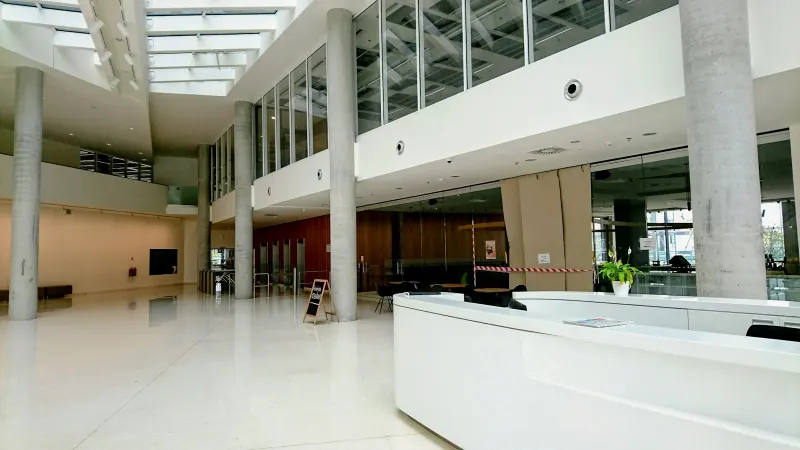

What you can check before you pay
The hospital
- Accreditation
- JCI-accredited, with the certificate number given to you in writing before any deposit.
- Licence
- Turkish Ministry of Health licence, named and verifiable independently rather than described in general terms.
- Intensive care
- On site, in the same building, for every procedure under general anaesthetic. Not "available nearby".
- Anaesthesia
- A consultant anaesthetist present throughout the operation — not supervising several theatres from elsewhere.
- Nursing
- 24-hour nursing, with an English-speaking nurse on each shift and an interpreter for clinical conversations.
Photos are not proof
Photographs show you the rooms; they do not tell you whether there is an intensive care unit behind them. The facility is named to you in writing before you pay, with its licence and accreditation numbers, so you can verify it as well as see it.
If you want to see the building in person, ask — we can usually arrange a visit before you decide, and a provider unwilling to let you look around is telling you something.
How we verify a facility




How is PRP prepared and injected?
The preparation matters as much as the injection. Platelet concentration is what distinguishes an effective treatment from an expensive blood draw.
- 1Blood collection: 15–30 ml drawn into tubes containing an anticoagulant so the platelets stay suspended.
- 2First spin: a soft spin separates the sample into red cells at the bottom, a thin buffy coat of white cells and platelets in the middle, and plasma above.
- 3Second spin: a harder spin concentrates the platelets further. A good preparation achieves three to five times baseline platelet concentration — below that, the evidence for benefit weakens considerably.
- 4Separating the fraction: the platelet-poor plasma is drawn off and the platelet-rich fraction retained, typically 3–6 ml from a 30 ml draw.
- 5Activation: some protocols add calcium chloride to activate the platelets and trigger growth factor release before injection; others rely on the collagen in the skin to do it. Both approaches are used.
- 6Numbing: topical anaesthetic, a cooling device or a ring block around the scalp.
- 7Injection: fine needle injections into the dermis at roughly 1 cm intervals, at a depth where the follicles sit. Depth matters — too superficial wastes it, too deep misses the target.
- 8Massage: the area is gently massaged to distribute the concentrate evenly.
After PRP: what to expect
There is essentially no downtime. Expect tenderness and mild redness for a few hours, and do not wash your hair until the next day.
- Hours 0–6: scalp tenderness and redness, sometimes mild swelling at the forehead. Simple painkillers if needed, but avoid anti-inflammatories.
- Day 1: do not wash your hair for 24 hours. No hats pressing on the scalp.
- Days 2–3: any tenderness settles. Normal washing and styling resume.
- Week 1: avoid saunas, steam rooms, swimming pools and heavy exercise for the first 48 hours; after that, normal activity.
- Months 1–3: no visible change. This is expected — follicles respond slowly.
- Months 3–4: the first subtle improvement in thickness and reduced shedding, usually noticed as less hair in the shower before it is visible in the mirror.
- Month 6: the point at which the course should be judged, against your baseline photographs rather than memory.
Is PRP safe?
PRP uses your own blood, so there is no risk of allergic reaction or disease transmission. It is among the safest treatments in this field — the honest caveat is about efficacy, not safety.
Velsa works with licensed clinics in Istanbul using closed-system PRP kits and doctors registered with the Turkish Ministry of Health. Preparation is done in front of you, from your own blood, with no additives beyond anticoagulant and in some protocols calcium chloride.
Risks you should know about
- Pain during injection: the main complaint, and the reason numbing is used.
- Tenderness and redness: for a few hours afterwards.
- Bruising at the injection sites or the blood draw: minor and self-limiting.
- Headache: occasionally, for a day.
- Temporary shedding: a small number of patients notice increased shedding in the first weeks before improvement.
- Infection: very rare with sterile technique.
- No response: a genuine possibility, and the most common disappointment.
- Fainting at the blood draw: uncommon, and managed by lying you down.
PRP is not appropriate if you have a platelet disorder, are on anticoagulants, have an active scalp infection, or have a blood-borne condition affecting platelet function. Tell your doctor about every medication you take.
Your medical team
Meet your PRP hair therapy team
You meet your specialist in person before treatment, and they follow your recovery until you are fully healed.
Meet the whole teamFree online consultation
Start your PRP hair therapy journey
- 1Share your detailsFill in the form in under a minute.
- 2Send your photosYour coordinator tells you which photos we need, via WhatsApp or email.
- 3Receive your planA specialist reviews your case and you get a written, all-inclusive quote.
Can PRP be combined with other treatments?
It should be. PRP produces its best results as part of a plan alongside medical treatment or surgery, rather than as a standalone.
Think of hair treatment as three separate jobs: stop the loss, thicken what remains, and replace what is gone. Medication does the first, PRP helps with the second, and only a transplant does the third. Patients who use all three where appropriate get the best outcomes.
Commonly combined with
- Minoxidil: the combination with the most supporting evidence. PRP and minoxidil together outperform either alone in several studies.
- Finasteride: for men with androgenetic alopecia, addressing the hormonal driver that PRP does not touch.
- Hair transplant: PRP at the time of surgery appears to improve graft survival and speed recovery, and is often included in Velsa packages.
- Hair mesotherapy: a lighter vitamin-based injection treatment, sometimes alternated with PRP. Weaker evidence. See hair mesotherapy.
- Exosome therapy: a newer adjunct with much thinner evidence than PRP. See exosome hair therapy.
If a clinic offers you PRP without asking whether you have tried minoxidil, or without looking at your bloods, they are selling a procedure rather than treating your hair.
How to prepare for a PRP session
Stop anti-inflammatories a week beforehand, drink plenty of water, eat before you come, and wash your hair that morning.
- Anti-inflammatories: no ibuprofen, naproxen or aspirin for a week before. They suppress exactly the platelet activity PRP relies on.
- Hydration: drink plenty of water the day before and the morning of. A well-hydrated patient gives a better blood draw and a better yield.
- Eat beforehand: do not come fasted. Fainting at the blood draw is far more likely on an empty stomach.
- Clean hair: wash your hair the morning of the session and use no product afterwards.
- Alcohol and smoking: avoid alcohol for 48 hours before, and cut back on nicotine, which reduces scalp blood flow.
- Supplements: tell your doctor about fish oil, vitamin E, ginkgo and turmeric, all of which affect platelet function.
PRP results and how long they last
Expect modest, gradual thickening from about month three, peaking at six months, and fading over six to twelve months without maintenance sessions.
The honest description of a good PRP result is "my hair looks better and I am shedding less", not "my hair has grown back". Published trials report increases of roughly 15–30 hairs per square centimetre and measurable improvements in hair diameter. That is a real change and it shows in standardised photographs; it is not the kind of change a stranger comments on.
The effect is not permanent. Without maintenance every six to twelve months, hair gradually returns to its previous trajectory, because PRP does nothing about the underlying cause of pattern loss. This is why it works best alongside minoxidil or finasteride, which address the driver rather than the symptom. Judge your course at six months against your baseline photographs, not against your memory of how your hair used to look. As consented cases are added, our hair transplant before and after gallery shows standardised PRP comparisons.
FAQ
PRP hair therapy in Turkey: frequently asked questions
At Velsa, £120–£180 per session or £350–£550 for a course of three or four. The UK equivalent is typically £350–£700 per session. Most patients add PRP to a hair transplant trip rather than travelling for it alone.
For early to moderate thinning, yes — modestly. Multiple randomised trials show statistically significant increases in hair count and thickness against saline. Typical gains are 15–30 hairs per square centimetre, which is visible in standardised photographs rather than dramatic in a mirror.
No. PRP stimulates follicles that are still alive but miniaturising. Where the scalp is completely bald, the follicle has gone and there is nothing to stimulate. Only a transplant replaces hair in that situation.
A course of three or four, one month apart, then maintenance every six to twelve months. A single session is not a treatment and will not produce a meaningful result.
The injections are the uncomfortable part — a series of small, sharp pricks across the scalp. Topical anaesthetic, a cooling device or a nerve block makes it manageable. The blood draw is an ordinary needle.
Reduced shedding first, usually at two to three months, then gradual thickening from three to four months, peaking around six. Judge the course at six months against your baseline photographs.
Six to twelve months without maintenance, after which hair gradually returns to its previous trajectory. PRP does not address the cause of pattern loss, which is why it works best alongside minoxidil or finasteride.
They do different jobs. PRP thickens hair you still have; a transplant replaces hair that has gone. If you are visibly bald anywhere, PRP alone will not get you where you want to be.
Very. It uses your own blood, so there is no risk of allergic reaction or disease transmission. The main adverse effects are pain during injection and a few hours of tenderness.
Anti-inflammatory drugs suppress the exact platelet activity PRP depends on. Avoid ibuprofen, naproxen and aspirin for a week before and a few days after each session, and use paracetamol instead.
There is reasonable evidence that it improves graft survival and speeds recovery. Velsa includes a PRP session with most transplant packages where it is clinically indicated.
Yes, and it is particularly useful in female pattern loss where fewer medical options exist — finasteride is generally not prescribed to women of childbearing age. PRP alongside minoxidil is a reasonable combination. See our female hair transplant page.
Medical disclaimer: This page is for general information only and does not replace a consultation with a qualified surgeon. Prices depend on your individual assessment. Every surgery carries risks, and individual results vary.