

What is an eyebrow transplant?
An eyebrow transplant moves individual hairs from the scalp donor area into the brow, placed one at a time at the specific angle and direction that eyebrow hair grows — which changes across every part of the brow.
Of all hair restoration procedures, this is the one where technique is least forgiving. Eyebrow hairs lie at 5–15 degrees to the skin, almost flat — far flatter than beard hair and nothing like scalp hair. And the direction rotates across the brow: at the inner head the hairs sweep upward, through the body they angle outward, and at the tail they lie almost horizontally. A graft placed a few degrees out points visibly in the wrong direction, and there are only 150–350 of them per brow, so each one counts.
Single-hair grafts are essential. A two-hair graft in an eyebrow produces two hairs emerging from one point, which reads as obviously artificial at conversational distance. Multi-hair units are either split under magnification or not used at all.
Against microblading and tattooing
| Transplant | Microblading | Tattoo | |
|---|---|---|---|
| What it is | Your own living hair | Semi-permanent pigment | Permanent pigment |
| Lasts | Permanent | 12–18 months | Years, colour shifts |
| Looks like hair | Yes, it is hair | From a distance | From a distance |
| Maintenance | Trimming every 2–4 weeks | Top-ups | Removal if disliked |
| Cost over 10 years | £1,200–£1,800 once | £3,000–£6,000 | £500–£1,500 |
Angle and direction in an eyebrow
Too steep
Eyebrow hair placed steeply stands away from the skin
Correct angle
Eyebrow hair sits almost flat, at 5–15°
Direction
An eyebrow changes direction three times across its length
How much does an eyebrow transplant cost in Turkey?
A Velsa all-inclusive eyebrow package in Istanbul costs £1,200–£1,800 for both brows. The UK equivalent is typically £3,500–£6,000.
| Treatment | Price (GBP) | Grafts | Nights in Turkey |
|---|---|---|---|
| Both eyebrows, light fill | £1,200–£1,450 | 250–450 | 3 |
| Both eyebrows, full reconstruction | £1,500–£1,800 | 450–700 | 3 |
| One eyebrow | £900–£1,200 | 150–350 | 3 |
| Scar camouflage within a brow | £800–£1,100 | 80–200 | 3 |
| Eyebrow with beard transplant | £2,400–£3,200 | Combined | 3 |
What the package includes
- Surgeon consultation and brow design
- The procedure itself, however many grafts you need
- All pre-operative blood tests
- Three nights in a four-star hotel with breakfast
- All airport, hotel and clinic transfers
- A personal English-speaking coordinator
- First wash performed at the clinic, with training
- Aftercare kit: lotion, ointment, medication
- Written trimming and care guidance
- Twelve months of remote aftercare and growth reviews
Why it costs more per graft than a scalp transplant
Because the graft count is low but the time per graft is high. Four hours for 500 grafts works out at a far higher cost per graft than eight hours for 4,000. You are paying for precision, not volume — and for a surgeon willing to spend twenty seconds getting the angle right on each one.
What it costs elsewhere
£1,200–£1,800
All-inclusive with Velsa: surgeon, hospital, hotel, transfers and twelve months of aftercare
£3,900+
Typical saving against the UK, mid-range against mid-range, before flights
72%
Less than the typical UK price
Bars span the usual range in each market, not a single quoted figure. Non-Turkish figures are indicative market ranges rather than quotes from named providers.
US and UK figures are typically the surgeon and facility only. Flights, accommodation, transfers and follow-up are extra in those markets and included in the Velsa price, which is the comparison that actually matters.
Your own price comes from a written quote after a clinician has reviewed your case. Nothing on this chart is a quote.
Why do patients from the UK, US and Europe choose Turkey?
Patients choose Turkey for lower all-inclusive prices, experienced hair restoration teams who perform transplants every day, modern private clinics, short waiting times and easy direct flights from most European and many US cities.
Turkey has become one of the world's leading medical travel destinations. According to Turkish industry figures reported in July 2026, the country welcomed around 1.4 million health tourists in 2025, generating over $3 billion in revenue. Hair transplantation is the treatment Turkey is best known for.
- Value: lower operating and living costs mean you pay less for the same standard of treatment.
- Experience: leading clinics in Istanbul perform hair transplants every day.
- Speed: consultations can be arranged online within days, and treatment dates are flexible.
- Access: most UK and European airports have direct flights of around 3–4 hours.
- Recovery comfort: you recover in a hotel with a coordinator on hand, rather than managing alone at home.
Every Velsa quote names the surgeon who will design your hairline and the clinic where the work is done, before you pay anything.
Am I a good candidate for an eyebrow transplant?
The best candidates have sparse brows from over-plucking, ageing, scarring or genetics, with stable rather than progressive loss and a healthy scalp donor area.
An eyebrow transplant is usually suitable if
- You over-plucked for years and the hair never grew back.
- Your brows have thinned with age, which is extremely common after 40.
- You have a scar through the brow from injury, surgery or burns.
- You have naturally sparse brows and always have.
- You want to stop paying for microblading every twelve to eighteen months.
- You are transitioning and want a different brow shape or density.
You may need treatment first, or another option
- You have alopecia areata affecting the brows: this is autoimmune and needs dermatological treatment. Transplanting into active disease fails.
- You have trichotillomania and are still pulling: the new hairs will be pulled out too. This needs addressing first, with no judgement attached.
- You have frontal fibrosing alopecia, a scarring condition that commonly affects brows and in which grafts usually do not survive.
- Your thyroid is untreated: thyroid disease thins the outer third of the brow characteristically, and treating it often restores the hair.
- You are mid-chemotherapy: brow hair usually returns on its own afterwards.
- You will not commit to trimming every few weeks.
Our self-check below gives you a starting answer, and a Velsa surgeon reviews your photographs free of charge before you commit to anything.
1-minute self-check
Am I a good candidate for an eyebrow transplant?
Answer 6 quick questions to see if an eyebrow transplant could be right for you. No personal details needed to see your result.
Your eyebrow transplant journey in Turkey, day by day
Three nights in Istanbul and a half-day in the clinic — the shortest procedure we offer, and the most precise.
- 1Before you travel: you send photographs straight on and from both sides, with no brow makeup. A surgeon assesses the existing hair, the shape you want and the graft count, and you receive a written fixed quote.
- 2Day 1 — arrival: your driver meets you at Istanbul airport and takes you to the hotel. Do not pluck, wax or thread for at least two weeks beforehand.
- 3Day 2 — design: this is the longest conversation of the day. The brow shape is drawn with you sitting upright in front of a mirror and adjusted until you are happy. Bring reference photographs. Nothing starts until you approve it.
- 4Day 2 — the procedure: a small donor strip at the back of the scalp is trimmed, local anaesthetic given, and single-hair grafts extracted. Placement follows, one graft at a time, with a Choi implanter pen for angle control. Three to five hours in total.
- 5Day 3 — first wash: you return to the clinic for your first wash and aftercare instructions, including how to care for grafts this close to the eyes.
- 6Day 4 — fly home: a final check and transfer to the airport.
- 7Days 5–7: crusts clear from the brows. Mild swelling around the eyes is common in the first days.
- 8Weeks 2–4: shock loss — the transplanted hairs shed. Expected, and the follicle remains.
- 9Months 3–4: first new growth. Months 9–12: the final result, with trimming from about month four.
Where you will be cared for
Our partner hospital and hotel
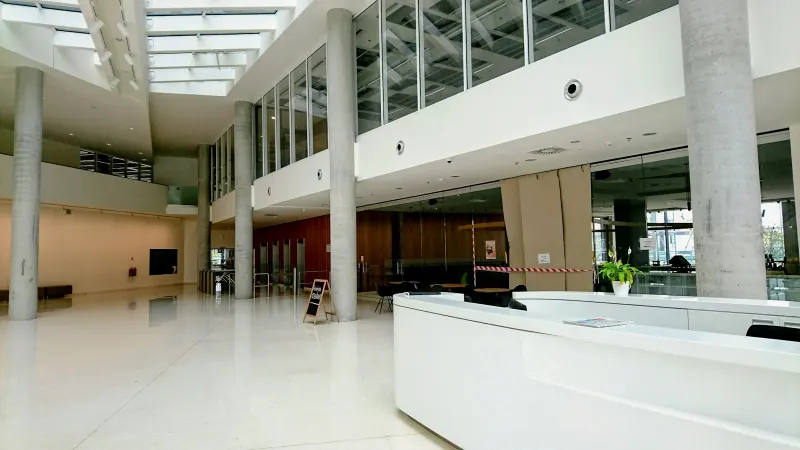
See where you will have your surgery and where you will recover, before you travel.



What you can check before you pay
The hospital
- Accreditation
- JCI-accredited, with the certificate number given to you in writing before any deposit.
- Licence
- Turkish Ministry of Health licence, named and verifiable independently rather than described in general terms.
- Intensive care
- On site, in the same building, for every procedure under general anaesthetic. Not "available nearby".
- Anaesthesia
- A consultant anaesthetist present throughout the operation — not supervising several theatres from elsewhere.
- Nursing
- 24-hour nursing, with an English-speaking nurse on each shift and an interpreter for clinical conversations.
Photos are not proof
Photographs show you the rooms; they do not tell you whether there is an intensive care unit behind them. The facility is named to you in writing before you pay, with its licence and accreditation numbers, so you can verify it as well as see it.
If you want to see the building in person, ask — we can usually arrange a visit before you decide, and a provider unwilling to let you look around is telling you something.
How we verify a facility




How is an eyebrow transplant performed?
Three to five hours under local anaesthetic. Single hairs only, placed one at a time, almost always with a Choi implanter pen.
- 1Design: the brow shape is drawn with you sitting upright in front of a mirror and refined until you approve it. Symmetry is checked against your facial midline rather than against the other brow, since few faces are symmetrical.
- 2Donor selection: hair is taken from the nape area at the back of the scalp, where the hair is finest and closest in calibre to brow hair. Only a small strip is trimmed.
- 3Local anaesthetic: injected into the donor area and then the brows. Anaesthetic around the eyes is uncomfortable for a minute or two.
- 4Extraction: single-hair follicular units are removed with a 0.7 mm punch. Multi-hair units are either split under magnification or set aside — a two-hair graft in a brow looks obviously artificial.
- 5Sorting: grafts are sorted by calibre, with the finest reserved for the inner head of the brow where hairs are naturally most delicate.
- 6Placement: each graft is placed with a Choi implanter pen at 5–15 degrees to the skin, following the direction of that specific part of the brow — upward at the head, outward through the body, horizontal at the tail.
- 7Density planning: the head of the brow is placed less densely than the body, mirroring how natural brows grow, and the tail is tapered rather than cut off.
- 8Finishing: no dressing. An ointment is applied and you are shown how to clean around the eyes.
Eyebrow transplant recovery timeline
Crusting clears in five to seven days and swelling around the eyes settles within three. Trimming begins at about four months and continues indefinitely.
- Days 1–3: small crusts on each graft and mild swelling around the eyes, sometimes reaching the lids. Sleep propped up.
- Days 3–7: crusts begin lifting. Clean gently with the lotion provided and do not rub. This is the visible phase.
- Days 5–7: crusts clear. Pinkness remains for a further week and fades.
- Weeks 2–4: shock loss — the transplanted hairs shed. Completely normal; the follicle is intact.
- Months 1–3: the brows look much as they did before. Nothing is wrong.
- Months 3–4: first new growth, sparse and fine. Trimming starts around now — the hairs will keep growing to scalp length.
- Months 6–9: density fills in and the brow shape becomes apparent.
- Months 9–12: the final result. (Brow makeup can usually resume from about three weeks.)
Is an eyebrow transplant safe?
Surgically it is the lowest-risk procedure on this site — small, superficial and under local anaesthetic. The risks are almost entirely cosmetic, and they are permanent if the design is wrong.
Velsa works only with licensed clinics in Istanbul, and refers eyebrow cases only to surgeons who perform them regularly. Eyebrow work is a specialist skill rather than a scaled-down hair transplant, and the difference shows immediately.
Risks you should know about
- Wrong angle: hairs standing up or pointing the wrong way. The commonest technical failure and highly visible.
- Poor shape or asymmetry: a design failure, and difficult to correct once grafts have grown.
- Multi-hair grafts: two hairs from one point, which reads as artificial at close range.
- Poor growth: a proportion of grafts may not take, sometimes needing a small second session.
- Shock loss of existing brow hair: usually temporary.
- Swelling around the eyes: expected rather than a complication, settling within three days.
- Folliculitis: small spots around new hairs at weeks 4–8, usually self-limiting.
- Permanent trimming commitment: not a risk exactly, but a lifelong consequence.
If you have been pulling your brows out, be honest about it at assessment. Trichotillomania is common, it carries no stigma here, and operating before it is managed simply means the new hairs get pulled too.
Your medical team
Meet your eyebrow transplant team
You meet your specialist in person before treatment, and they follow your recovery until you are fully healed.
Meet the whole teamFree online consultation
Start your eyebrow transplant journey
- 1Share your detailsFill in the form in under a minute.
- 2Send your photosYour coordinator tells you which photos we need, via WhatsApp or email.
- 3Receive your planA specialist reviews your case and you get a written, all-inclusive quote.
Can an eyebrow transplant be combined with other procedures?
Yes, easily. Graft numbers are small, so an eyebrow transplant adds little to a beard or scalp session and is often done in the same trip.
Because the procedure only takes a few hundred grafts, it barely touches your donor reserve and fits comfortably alongside larger work.
Commonly combined with
- Beard transplant: both are facial, both use DHI, and both suit the same trip. See beard and moustache transplant.
- Scalp hair transplant: easily added, though it extends an already long day.
- PRP therapy: to support graft survival in a small, precise area where every graft matters.
- Scar camouflage: filling a scar that interrupts the brow, often done as part of the same design.
Microblading and transplants together
Some patients have a transplant for structure and light microblading afterwards for definition, which can work well. Have the transplant first and wait at least twelve months — microblading over fresh grafts risks damaging them, and you will not know the final density until a year has passed.
How to prepare for your eyebrow transplant
Stop plucking and waxing two weeks beforehand, bring reference photographs, and plan around a week of visible crusting.
- Stop plucking: no plucking, waxing, threading or tinting for at least two weeks before. Your surgeon needs to see your natural growth pattern to design around it.
- Reference photographs: bring pictures of brow shapes you like. Design is far easier with a visual reference than a description.
- No makeup on the day: arrive with clean brows so the design can be drawn accurately.
- Medication: tell your surgeon everything you take. Blood thinners, aspirin and some supplements raise bleeding during extraction.
- Alcohol and smoking: no alcohol for 3 days before, and stop nicotine for at least 2 weeks before and after.
- Time off: plan five to seven days. Crusting is on your face and cannot be covered with makeup.
Eyebrow transplant results
The result is permanent real hair that can be brushed, trimmed and shaped. Final density appears at nine to twelve months, and the hairs need trimming every two to four weeks for life.
The single thing that determines whether an eyebrow transplant looks good is angle. When grafts lie flat and follow the natural direction of each part of the brow, the result is indistinguishable from brows you were born with. When they do not, it is obvious immediately and from across a room. This is why eyebrow work should go to someone who does it routinely, not to whoever happens to be available.
Expect the hairs to behave like scalp hair, because that is what they are: they grow continuously rather than reaching a set length and stopping. Trimming every two to four weeks becomes a small permanent habit, like cutting your nails. Some patients also brush the hairs into place with a little clear gel. Judge the result at twelve months and no sooner — at three to four months brows look sparse and uneven, and that phase passes. As consented cases are added, our hair transplant before and after gallery shows outcomes.
FAQ
Eyebrow transplant in Turkey: frequently asked questions
At Velsa, £1,200–£1,800 all-inclusive for both brows. That covers the surgeon, the procedure, three hotel nights, all transfers, your aftercare kit and twelve months of growth reviews. The UK equivalent is typically £3,500–£6,000.
Typically 150–350 per brow, depending on how much natural hair remains and the density you want. A full reconstruction from almost nothing uses more; filling gaps in existing brows uses fewer.
Yes. The hairs come from your scalp and keep scalp growth behaviour, so they grow to scalp length rather than stopping at brow length. Trimming every two to four weeks becomes a permanent small habit. This is the one thing everyone should know before booking.
It is permanent and it is real hair rather than pigment, so it looks right at close range and in photographs. Microblading is cheaper upfront, needs redoing every twelve to eighteen months, and never quite reads as hair up close. Over ten years a transplant usually costs less.
The anaesthetic injections around the eyes are uncomfortable for a minute or two. After that you should feel pressure rather than pain. Afterwards the donor area at the back of the scalp is the sorer part, not the brows.
Eyebrow hairs lie at 5–15 degrees to the skin — almost flat — and the direction rotates across the brow: upward at the head, outward through the body, horizontal at the tail. A graft a few degrees out points visibly the wrong way, and with only a few hundred grafts each one shows.
Yes, and it is the commonest reason patients come. Years of plucking can permanently destroy follicles, and a transplant is the only way to replace them with real hair.
On the brows, at about three weeks with your surgeon's confirmation. Elsewhere on the face, once the crusting has cleared at around a week. Avoid anything that requires rubbing the brow area to remove.
Transplanting into active alopecia areata usually fails, because the autoimmune process attacks the new follicles too. It needs dermatological treatment and a period of stability first. The same applies to frontal fibrosing alopecia, where grafts commonly do not survive at all.
Not until the pulling has stopped — the new hairs will be pulled out too. Trichotillomania is common and treatable, and raising it is simply practical rather than something to be embarrassed about. We would rather you told us.
Closely. Donor hair is taken from the nape, where scalp hair is finest and nearest in calibre to brow hair. It may be slightly coarser or a shade different, and it grows faster — once trimmed to the same length the blend is good.
Yes, but wait at least twelve months. Microblading over fresh grafts risks damaging them, and you will not know your final density until a year has passed. Some patients find they no longer need it.
Medical disclaimer: This page is for general information only and does not replace a consultation with a qualified surgeon. Prices depend on your individual assessment. Every surgery carries risks, and individual results vary.