

What is a thread lift?
A thread lift uses dissolvable sutures with small barbs or cones along their length. Passed under the skin with a needle or cannula and then drawn upward, the barbs grip the tissue and hold it in a higher position.
The threads themselves are made of polydioxanone, the same material used in surgical sutures, and they dissolve over six to eight months. The lift they provide outlasts them, because the body lays down collagen along the thread track as it dissolves — a scaffold that holds some of the repositioning after the thread has gone.
That is the honest mechanism, and it explains both the appeal and the limitation. There is no incision, no general anaesthetic and almost no downtime. But the lift is mechanical traction on skin rather than release and repositioning of the deeper structures, so what it achieves is measured in a centimetre or two and in months rather than years.
Thread types
| Type | Mechanism | Used for | Lasts |
|---|---|---|---|
| Barbed (cog) threads | Mechanical lift | Jawline, cheeks, brow | 9–18 months |
| Mono threads | Collagen stimulation only | Skin texture, fine lines | 6–12 months |
| Screw threads | Volume and stimulation | Localised volume | 6–12 months |
| Cone threads (PLLA) | Stronger mechanical lift | Mid-face, jawline | 12–24 months |
What a thread lift does, and does not
How it works
Barbed threads are passed under the skin and anchored upwards
What it achieves
Up to a centimetre or two of lift along the jaw, and some collagen response
What it is not
Not a facelift. It lasts 12–18 months and cannot lift heavy tissue
How much does a thread lift cost in Turkey?
Velsa charges £550–£1,400 depending on how many threads are used and of what type. The UK equivalent is typically £1,500–£3,500.
| Treatment | Price (GBP) | Threads | Lasts |
|---|---|---|---|
| Lower face and jawline | £700–£1,100 | 6–10 barbed | 9–18 months |
| Mid-face and cheeks | £650–£1,000 | 4–8 barbed | 9–18 months |
| Brow lift with threads | £550–£850 | 4–6 barbed | 9–12 months |
| Full face | £1,100–£1,400 | 12–16 barbed | 9–18 months |
| Mono threads for texture | £400–£700 | 20–40 mono | 6–12 months |
What the session includes
- Consultation and facial assessment
- Local anaesthetic
- The threads, with brand and batch recorded
- Insertion and lifting
- Standardised before photographs
- Written aftercare instructions
- A personal English-speaking coordinator
- A review before you fly home
The arithmetic against a facelift
A full-face thread lift at £1,400 lasting twelve to eighteen months is roughly £1,000 a year. A deep plane facelift at £3,800–£5,600 lasting ten to fifteen years is roughly £400 a year, and achieves considerably more. Threads make sense when you want a modest improvement now and are not ready for surgery — not as a cheaper route to the same destination, because they do not reach it.
What it costs elsewhere
£550–£1,400
All-inclusive with Velsa: surgeon, hospital, hotel, transfers and twelve months of aftercare
£1,400+
Typical saving against the UK, mid-range against mid-range, before flights
59%
Less than the typical UK price
Bars span the usual range in each market, not a single quoted figure. Non-Turkish figures are indicative market ranges rather than quotes from named providers.
US and UK figures are typically the surgeon and facility only. Flights, accommodation, transfers and follow-up are extra in those markets and included in the Velsa price, which is the comparison that actually matters.
Your own price comes from a written quote after a clinician has reviewed your case. Nothing on this chart is a quote.
Why do patients from the UK, US and Europe choose Turkey?
Patients choose Turkey for lower all-inclusive prices, experienced aesthetic doctors who treat high volumes of patients, modern private clinics, short waiting times and easy direct flights from most European and many US cities.
Turkey has become one of the world's leading medical travel destinations. According to Turkish industry figures reported in July 2026, the country welcomed around 1.4 million health tourists in 2025, generating over $3 billion in revenue. Aesthetic treatments are among the most requested categories.
- Value: lower operating and living costs mean you pay less for the same standard of treatment.
- Experience: leading clinics in Istanbul carry out these treatments every day.
- Speed: consultations can be arranged online within days, and treatment dates are flexible.
- Access: most UK and European airports have direct flights of around 3–4 hours.
- Recovery comfort: you recover in a hotel with a coordinator on hand, rather than managing alone at home.
Every Velsa quote names the doctor and the clinic before you pay, and the product used is recorded in your notes.
Am I a good candidate for a thread lift?
Threads suit patients in their late thirties to early fifties with early laxity, reasonable skin quality and a face that has not yet lost significant volume.
A thread lift is usually suitable if
- Your jawline or cheeks have started to soften but have not significantly dropped.
- You are not ready for surgery and want a modest improvement now.
- You cannot take time off for a surgical recovery.
- Your skin still has reasonable elasticity.
- You understand the result is modest and temporary.
- You are in your late thirties to early fifties, which is where threads perform best.
Surgery or another treatment will serve you better if
- You have significant jowls or neck laxity: threads cannot lift that weight, and will produce dimpling if someone tries.
- Your skin is thin and lax: threads pull through lax skin rather than lifting it, and the result fails early.
- Your problem is volume loss rather than descent: filler or fat transfer is the answer.
- You want a result lasting years: a facelift is the only honest route to that.
- You have had multiple previous thread lifts: scar tissue along old tracks makes new threads less effective.
- You expect a facelift result without surgery: that does not exist, and we would rather say so.
Our self-check below gives you an honest starting answer, and a Velsa doctor assesses your photographs free of charge. If we think threads will disappoint you, we will say so.
1-minute self-check
Would a thread lift work for me?
Answer 6 quick questions to see whether threads suit your face, or whether something else would serve you better. No personal details needed to see your result.
Your thread lift appointment, step by step
Three nights in Istanbul, a forty-five to seventy-five minute procedure, and a review before you fly.
- 1Before you travel: you send photographs straight on, in three-quarter view and lying slightly back if you can. A doctor assesses skin elasticity and the degree of descent, and tells you honestly whether threads will achieve what you want.
- 2Day 1 — arrival: your driver meets you at Istanbul airport and takes you to the hotel.
- 3Day 2 — assessment and treatment: your doctor marks the planned vectors with you sitting upright, showing you in a mirror how much lift is achievable by pulling the skin gently. What you see is roughly what threads will deliver.
- 4Day 2 — the procedure: local anaesthetic, then the threads are inserted through small entry points and drawn upward. Forty-five to seventy-five minutes. You see the result before you leave.
- 5Day 3 — review: swelling and some puckering at the entry points, both of which settle. Your doctor checks symmetry.
- 6Day 4 — fly home with written aftercare.
- 7Weeks 1–2: swelling settles and any puckering resolves. No facial massage, no dental work, no sleeping on your face.
- 8Month 1: the result settles slightly as the initial over-correction relaxes. This is when to judge it.
- 9Months 6–8: the threads dissolve. The collagen laid along their tracks holds part of the lift.
Where you will be cared for
Our partner hospital and hotel
See where you will have your surgery and where you will recover, before you travel.


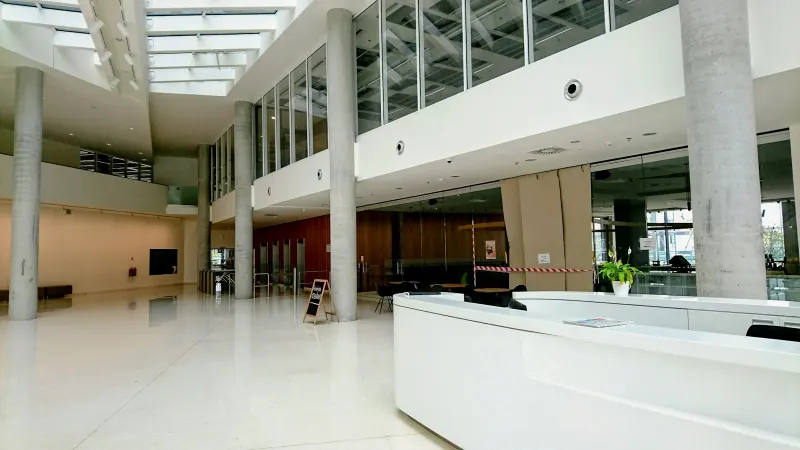

What you can check before you pay
The hospital
- Accreditation
- JCI-accredited, with the certificate number given to you in writing before any deposit.
- Licence
- Turkish Ministry of Health licence, named and verifiable independently rather than described in general terms.
- Intensive care
- On site, in the same building, for every procedure under general anaesthetic. Not "available nearby".
- Anaesthesia
- A consultant anaesthetist present throughout the operation — not supervising several theatres from elsewhere.
- Nursing
- 24-hour nursing, with an English-speaking nurse on each shift and an interpreter for clinical conversations.
Photos are not proof
Photographs show you the rooms; they do not tell you whether there is an intensive care unit behind them. The facility is named to you in writing before you pay, with its licence and accreditation numbers, so you can verify it as well as see it.
If you want to see the building in person, ask — we can usually arrange a visit before you decide, and a provider unwilling to let you look around is telling you something.
How we verify a facility




How is a thread lift performed?
Forty-five to seventy-five minutes under local anaesthetic, through entry points hidden in the hairline or behind the ear.
- 1Assessment and vectors: your doctor marks the direction each thread will pull. Vector choice is the whole art of this procedure — lifting toward the ear widens the face, lifting up and back follows the direction tissue actually fell.
- 2Demonstrating the lift: the skin is gently drawn upward with fingers so you can see in a mirror what is realistically achievable. If what you see is not enough, threads are not your answer.
- 3Anaesthetic: local anaesthetic at the entry points and along the planned thread tracks.
- 4Entry points: small punctures made in the temporal hairline or behind the ear, where they are hidden.
- 5Thread insertion: a blunt cannula or needle carries the thread through the subcutaneous layer along the marked vector. Depth matters — too superficial causes visible ridging, too deep achieves no grip.
- 6Engaging the barbs: the thread is advanced and then the tissue is drawn up against the barbs, which grip and hold it in the new position.
- 7Anchoring: the thread is secured at the entry point, often by anchoring to the deep temporal fascia, and the free end trimmed below the skin.
- 8Smoothing: the skin is gently massaged to release any puckering, and symmetry checked with you sitting upright.
Thread lift recovery timeline
Minimal downtime, but expect tightness, some swelling and occasional puckering for one to two weeks. Most patients are presentable within three to five days.
- Days 1–3: tightness and a pulling sensation, mild swelling and sometimes visible puckering at the thread entry points. Bruising is possible.
- Days 3–7: swelling settles and puckering resolves. Most patients are comfortable in public.
- Weeks 1–2: no facial massage, no sleeping face-down, no wide yawning or exaggerated expressions, and no dental work. All can displace threads before they have anchored.
- Weeks 2–4: the initial over-correction relaxes into the final position. Any residual tightness resolves.
- Month 1: judge the result. This is the settled position.
- Months 6–8: the threads dissolve completely.
- Months 9–18: the lift gradually fades as the collagen scaffold remodels. Most patients repeat at around twelve months.
Is a thread lift safe?
Thread lifting is low-risk and fully reversible in the sense that the threads dissolve. The problems that occur are usually visible rather than dangerous.
Velsa works with licensed clinics in Istanbul and doctors registered with the Turkish Ministry of Health, using CE-marked polydioxanone threads with batch numbers recorded in your notes.
Risks you should know about
- Under-whelming result: the most common complaint, and usually a mismatch between expectation and mechanism.
- Dimpling or puckering: at the entry points or along the thread, usually settling within two weeks.
- Visible or palpable threads: particularly in thin skin, where a thread placed too superficially can be felt or seen.
- Asymmetry: common and usually correctable by adjusting or adding a thread.
- Thread extrusion: a thread end working its way out through the skin. Uncommon, and the thread is simply trimmed.
- Infection: uncommon but a foreign body in the face, so it needs prompt treatment and sometimes thread removal.
- Bruising and swelling: expected rather than complications.
- Early failure: from dental work, facial massage or sleeping face-down in the first fortnight.
Tell your doctor if you have had threads before, and how many. Scar tissue along previous tracks reduces the grip new threads can achieve, and repeated thread lifting becomes progressively less effective.
Your medical team
Meet your thread lift team
You meet your specialist in person before treatment, and they follow your recovery until you are fully healed.
Meet the whole teamFree online consultation
Start your thread lift journey
- 1Share your detailsFill in the form in under a minute.
- 2Send your photosYour coordinator tells you which photos we need, via WhatsApp or email.
- 3Receive your planA specialist reviews your case and you get a written, all-inclusive quote.
Can a thread lift be combined with other treatments?
Usually it should be. Threads reposition tissue but add no volume and do nothing for skin quality, and a face that needs lifting usually needs those too.
Thread lifting on its own treats one of the three components of facial ageing. Combining it with volume replacement and skin treatment produces a far more coherent result than threads alone, and it is how experienced injectors use them.
Commonly combined with
- Dermal fillers: volume at the cheekbone supports the lift and addresses the deflation that threads do not. See dermal fillers.
- Botulinum toxin: for upper-face movement lines, which threads do not affect. See botox.
- Skin boosters: for texture and crepiness. See skin boosters.
- PRP skin rejuvenation: for overall skin quality alongside the mechanical lift. See PRP skin rejuvenation.
Threads before surgery
Having threads does not prevent a facelift later, though it can make the dissection slightly more fibrous. Tell any future surgeon that you have had them. Many patients use threads through their forties and move to surgery in their fifties, which is a reasonable progression rather than a failure of either.
How to prepare for a thread lift
Avoid blood thinners, schedule dental work well clear of the treatment, and send photographs that show your face both upright and reclined.
- Blood thinners: avoid aspirin, anti-inflammatories, fish oil, vitamin E and alcohol for a few days beforehand to reduce bruising.
- Dental work: schedule it at least two weeks before or after. Prolonged wide mouth opening is a recognised cause of early thread failure.
- Photographs: send them upright and also lying slightly back. The difference between the two shows your doctor how much of your concern is descent that threads can address.
- Previous threads: tell your doctor how many you have had and when. Scar tissue along old tracks reduces what new threads can grip.
- Expectations: ask your doctor to show you the achievable lift by drawing your skin up with their fingers. What you see is roughly what you will get.
- Time off: plan three to five days. Most people are presentable sooner, but puckering can persist for a week.
Thread lift results and how long they last
Expect one to two centimetres of lift, visible immediately and settling at one month. The threads dissolve by six to eight months and the result fades over nine to eighteen.
The result is real and the right patient is pleased with it. A softening jawline tightened by a centimetre, a cheek supported back into position, no incision and three days of downtime is a genuine proposition for someone in their forties who is not ready for surgery. We are not dismissive of thread lifting — we are dismissive of how it is marketed.
The honest framing is a holding measure rather than a solution. Most patients repeat at around twelve months, and after two or three rounds the arithmetic starts favouring surgery — both on cost and on what is actually achieved. Patients who go into it understanding that are consistently satisfied; patients who were sold a non-surgical facelift are consistently not. We show twelve-month photographs alongside one-month ones in our before and after gallery for exactly that reason.
FAQ
Thread lift in Turkey: frequently asked questions
At Velsa, £700–£1,100 for the lower face and jawline, £650–£1,000 for the mid-face, or £1,100–£1,400 for a full face. The UK equivalent is typically £1,500–£3,500.
No, and nothing can make it so. A facelift releases ligaments, repositions deep tissue and removes skin. Threads pull on skin from above. Realistically they achieve 20–30% of a facelift result, lasting around a tenth as long.
One to two centimetres. Ask your doctor to draw your skin upward with their fingers in front of a mirror — what you see is roughly what threads deliver. If that is not enough, threads are not your answer.
The threads dissolve at six to eight months, and the result fades over nine to eighteen as the collagen laid along their tracks remodels. Most patients repeat at around twelve months.
Local anaesthetic makes the procedure comfortable. Afterwards expect tightness and a pulling sensation for a few days, and occasional tenderness when you move your face.
Six to ten for a lower face and jawline, four to eight for the mid-face, twelve to sixteen for a full face. Be sceptical of very cheap thread lifts — the saving is almost always in the thread count, and two or four will not lift a face.
They should not be. Threads placed at the correct depth are neither visible nor palpable. In very thin skin a thread placed too superficially can be felt or seen as a fine line, which is a technique issue.
Prolonged wide mouth opening stretches exactly the tissue the threads are holding, and it is a recognised cause of early failure. Avoid it for two weeks either side.
Yes. Previous threads do not prevent surgery, though they can make the dissection slightly more fibrous. Tell your surgeon you have had them. Many patients use threads through their forties and move to surgery in their fifties.
The threads dissolve within six to eight months, so nothing is permanent. Asymmetry can usually be corrected by adjusting or adding a thread, and a thread that is visible or palpable can be removed.
Someone in their late thirties to early fifties with early laxity, reasonable skin elasticity and no significant jowling, who wants a modest improvement without surgery and understands it will need repeating. For that person it works well.
If your jowls or neck have genuinely dropped, yes — threads will disappoint you and the money is better put toward surgery. If you are simply starting to soften and surgery feels premature, threads are a reasonable interim step.
Medical disclaimer: This page is for general information only and does not replace a consultation with a qualified surgeon. Prices depend on your individual assessment. Every surgery carries risks, and individual results vary.