

What is eyelid surgery?
Blepharoplasty reshapes the eyelids by removing excess skin, trimming or repositioning fat, and sometimes tightening the muscle. Upper and lower lid surgery are different operations with different aims and different risks.
Upper blepharoplasty removes the fold of skin that hangs over the lash line, which makes eyes look smaller and tired and in advanced cases blocks the outer field of vision. It is a relatively straightforward operation with a reliable result and a scar hidden in the natural crease.
Lower blepharoplasty is a harder operation. It addresses under-eye bags, which are usually not excess skin at all but fat that has pushed forward as the ligament holding it back has weakened. Treating that by removing fat and skin — the old approach — frequently produced hollow, sunken eyes that looked older rather than younger. Modern technique repositions the fat into the hollow below it instead.
The distinction that matters most
| Appearance | Usual cause | Right treatment |
|---|---|---|
| Hooded upper lid | Excess upper lid skin | Upper blepharoplasty |
| Hooded upper lid with low brow | Descended eyebrow | Brow lift, with or without blepharoplasty |
| Under-eye bags | Fat herniating forward | Fat repositioning, not removal |
| Dark hollows under the eye | Volume loss at the orbital rim | Fat repositioning or grafting |
| Fine crepey lower lid skin | Skin quality | Laser or peel, not surgery |
Upper lid, lower lid, or neither
Upper lid
Excess skin removed through the natural crease, where the scar disappears
Lower lid
Fat repositioned from inside the lid — usually with no visible scar at all
Brow, not lid
Where the brow has dropped, lifting the lid alone makes it worse
How much does eyelid surgery cost in Turkey?
A Velsa all-inclusive package in Istanbul costs £1,600–£2,900 depending on which lids are treated. The same operation privately in the UK is typically £3,500–£6,500.
| Procedure | Price (GBP) | Hospital nights | Nights in Turkey |
|---|---|---|---|
| Upper eyelids only | £1,600–£2,000 | Day case | 5 |
| Lower eyelids only | £2,000–£2,500 | Day case | 6 |
| Upper and lower together | £2,400–£2,900 | Day case or 1 | 6 |
| Eyelids with brow lift | £3,200–£4,200 | 1 | 7 |
| Eyelids with fat transfer to the tear trough | £2,800–£3,400 | Day case or 1 | 6 |
What the package includes
- Surgeon and anaesthetist fees
- Pre-operative blood tests and an ophthalmic check
- The procedure under local with sedation, or general anaesthetic
- Five nights in a four-star hotel with breakfast
- All airport, hotel and hospital transfers
- A personal English-speaking coordinator
- Lubricating eye drops and ointment
- Suture removal before you fly home
- Scar care products for the first three months
- Twelve months of remote aftercare
An eye check before surgery, not after
Pre-operative assessment includes tear production and a check for dry eye. Blepharoplasty can worsen dry eye significantly, and patients who already have it are at genuine risk of a miserable few months afterwards. Any clinic that does not ask about dry eye before eyelid surgery is skipping the one screening question that matters most.
What it costs elsewhere
£1,600–£2,900
All-inclusive with Velsa: surgeon, hospital, hotel, transfers and twelve months of aftercare
£3,200+
Typical saving against the UK, mid-range against mid-range, before flights
58%
Less than the typical UK price
Bars span the usual range in each market, not a single quoted figure. Non-Turkish figures are indicative market ranges rather than quotes from named providers.
US and UK figures are typically the surgeon and facility only. Flights, accommodation, transfers and follow-up are extra in those markets and included in the Velsa price, which is the comparison that actually matters.
Your own price comes from a written quote after a clinician has reviewed your case. Nothing on this chart is a quote.
Why do patients from the UK, US and Europe choose Turkey?
Patients choose Turkey for lower all-inclusive prices, experienced plastic surgeons who operate at high volume, modern private hospitals, short waiting times and easy direct flights from most European and many US cities.
Turkey has become one of the world's leading medical travel destinations. According to Turkish industry figures reported in July 2026, the country welcomed around 1.4 million health tourists in 2025, generating over $3 billion in revenue. Aesthetic surgery is one of the most requested categories.
- Value: lower operating and living costs mean you pay less for the same type of surgery and hospital care.
- Experience: leading surgeons in Istanbul and other major cities perform aesthetic operations every week.
- Speed: consultations can be arranged online within days, and surgery dates are flexible.
- Access: most UK and European airports have direct flights of around 3–4 hours.
- Recovery comfort: you recover in a hotel with a coordinator on hand, rather than managing alone at home.
Every Velsa quote names the surgeon and the hospital before you pay, so you can check both yourself.
Am I a good candidate for eyelid surgery?
The best candidates have excess upper lid skin or herniating lower lid fat, healthy eyes, no significant dry eye and realistic expectations about what changes and what does not.
Eyelid surgery is usually suitable if
- Your upper lids are hooded and the skin rests on or over your lashes.
- You have under-eye bags that persist regardless of sleep or salt.
- You look tired or angry when you are neither.
- Your outer field of vision is affected by overhanging skin.
- Your eyebrow position is normal — or you are willing to address it too.
- You are a non-smoker, or can stop at least four weeks before surgery.
You may need something else first
- Your brow has dropped: a brow lift addresses the cause; removing lid skin makes a low brow worse.
- You have significant dry eye: surgery frequently worsens it, sometimes for months.
- Your main concern is fine crepey skin: laser or a peel treats texture, which surgery does not.
- You have dark circles from pigmentation rather than shadow: surgery will not change colour.
- You have thyroid eye disease, glaucoma or an uncontrolled eye condition.
- You have had previous eyelid surgery: revision is harder, and tissue is finite.
Our self-check below gives you an honest starting answer, and a Velsa plastic surgeon reviews your photographs free of charge before you commit to anything.
1-minute self-check
Am I a good candidate for eyelid surgery?
Answer 6 quick questions to see if eyelid surgery could be right for you. No personal details needed to see your result.
Your eyelid surgery journey in Turkey, day by day
Six nights in Istanbul, with sutures removed before you fly — which is why the stay is longer than the operation suggests.
- 1Before you travel: you send photographs taken straight on with a neutral expression, and tell us about any dry eye, contact lens use or eye condition. A plastic surgeon assesses whether a brow lift is also needed. You receive a written fixed quote.
- 2Day 1 — arrival: your driver meets you at Istanbul airport and takes you to the hotel.
- 3Day 2 — assessment and surgery: blood tests, an eye check including tear production, then a consultation where the markings are drawn with you sitting upright and with your eyes open. Surgery the same afternoon, usually under local anaesthetic with sedation.
- 4Day 3 — review: swelling and bruising peak. Cold compresses, head elevated, lubricating drops hourly.
- 5Days 4–5 — rest: swelling begins to settle. Reading and screens in short bursts. No bending or lifting.
- 6Day 6 — suture removal: sutures come out at five to seven days. Your surgeon checks lid position and closure, and confirms you are fit to fly.
- 7Day 7 — fly home with eye drops, scar care products and written aftercare.
- 8After you are home: nurse check-ins at one week, six weeks, three months and twelve months.
Where you will be cared for
Our partner hospital and hotel
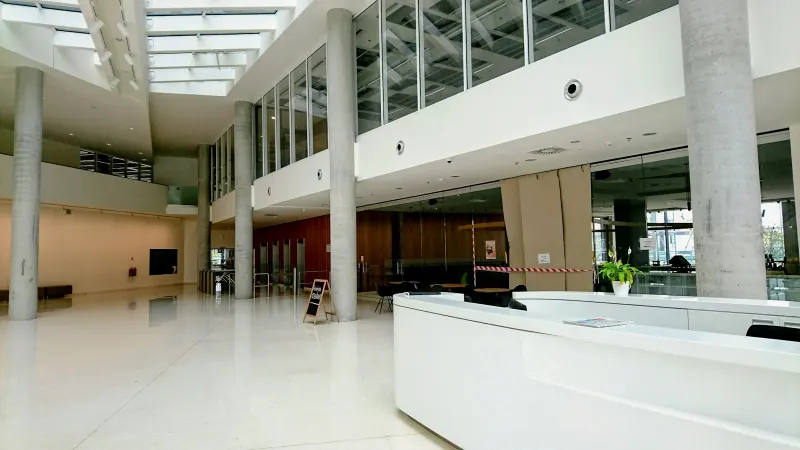
See where you will have your surgery and where you will recover, before you travel.



What you can check before you pay
The hospital
- Accreditation
- JCI-accredited, with the certificate number given to you in writing before any deposit.
- Licence
- Turkish Ministry of Health licence, named and verifiable independently rather than described in general terms.
- Intensive care
- On site, in the same building, for every procedure under general anaesthetic. Not "available nearby".
- Anaesthesia
- A consultant anaesthetist present throughout the operation — not supervising several theatres from elsewhere.
- Nursing
- 24-hour nursing, with an English-speaking nurse on each shift and an interpreter for clinical conversations.
Photos are not proof
Photographs show you the rooms; they do not tell you whether there is an intensive care unit behind them. The facility is named to you in writing before you pay, with its licence and accreditation numbers, so you can verify it as well as see it.
If you want to see the building in person, ask — we can usually arrange a visit before you decide, and a provider unwilling to let you look around is telling you something.
How we verify a facility




How is eyelid surgery performed?
One to two hours, usually under local anaesthetic with sedation. Upper and lower lids use entirely different approaches.
- 1Marking: with you sitting upright and your eyes open, your surgeon marks the skin to be removed. Marking a patient lying down is how too much gets taken, because the brow sits differently.
- 2Anaesthetic: local anaesthetic with sedation for most patients, or general anaesthetic if you prefer or if a brow lift is combined.
- 3Upper lid — incision: made in the natural crease, so the scar hides when your eye is open.
- 4Upper lid — removal: a measured strip of skin is removed, with a conservative amount of muscle. Fat is trimmed only where there is a genuine bulge at the inner corner. Over-removal causes a hollow, surprised look that is very difficult to correct.
- 5Lower lid — transconjunctival approach: for fat without excess skin, the incision is made inside the lid. No visible scar at all, and the lid margin is not disturbed.
- 6Lower lid — fat repositioning: rather than removing the herniating fat, it is released and redraped into the hollow at the orbital rim below, filling the tear trough with the patient's own tissue.
- 7Lower lid — skin tightening: where skin is genuinely excess, a fine incision just below the lashes allows a conservative trim, often with a canthal support stitch to prevent the lid pulling down.
- 8Closing: fine sutures, removed at five to seven days. Cold compresses begin immediately.
Eyelid surgery recovery timeline
Bruising rather than pain is what keeps people at home. Expect ten to fourteen days before you look presentable, and three to six months for the final result.
- Days 1–3: swelling and bruising peak, often spreading down the cheek. Cold compresses, head elevated day and night, lubricating drops hourly.
- Days 4–7: swelling begins to settle. Bruising moves through purple to yellow. Eyes may feel gritty and watery, which is normal.
- Days 5–7: sutures removed. The incision lines are pink and visible.
- Days 10–14: most patients are presentable with makeup and back at a desk job. Residual swelling makes the result look slightly uneven.
- Weeks 3–4: swelling largely resolved. Contact lenses can usually resume.
- Weeks 4–6: light exercise restarts. No heavy lifting or bending, both of which raise pressure around the eye.
- Months 3–6: the final result. Scars fade to fine pale lines in the upper lid crease and beneath the lashes.
Is eyelid surgery in Turkey safe?
Blepharoplasty is among the most commonly performed facial operations with a low complication rate. The risks that matter are over-removal and lid malposition, both of which are technique rather than chance.
Velsa works only with JCI-accredited private hospitals in Istanbul and with plastic surgeons registered with the Turkish Ministry of Health who hold Turkish Society of Plastic, Reconstructive and Aesthetic Surgeons membership. Pre-operative assessment includes tear production testing.
Risks you should know about
- Dry eye: common temporarily, and can be prolonged in those predisposed. The main reason for pre-operative testing.
- Ectropion or scleral show: the lower lid pulled down by over-removal or scar contracture.
- Lagophthalmos: inability to close the eye fully, from excessive upper lid removal.
- Asymmetry: eyes are rarely symmetrical to begin with, and small differences often remain.
- Hollowing: from removing fat that should have been repositioned, giving an aged rather than rested look.
- Visible scarring: usually hidden in the crease or below the lashes, occasionally more apparent.
- Haematoma: bleeding behind the eye is rare but is a surgical emergency, and the reason for a six-night stay.
- Changes in vision: extremely rare, but any sudden pain with visual loss needs immediate attention.
Sudden severe pain with reduced vision after eyelid surgery is an emergency. It is very rare, but it is why Velsa keeps you in Istanbul for six nights rather than sending you home after 48 hours.
Your medical team
Meet your eyelid surgery team
You meet your specialist in person before treatment, and they follow your recovery until you are fully healed.
Meet the whole teamFree online consultation
Start your eyelid surgery journey
- 1Share your detailsFill in the form in under a minute.
- 2Send your photosYour coordinator tells you which photos we need, via WhatsApp or email.
- 3Receive your planA specialist reviews your case and you get a written, all-inclusive quote.
Can eyelid surgery be combined with other procedures?
Frequently, and sometimes it should be. A brow lift addresses the cause of hooding that blepharoplasty only masks, and fat transfer restores volume that surgery alone cannot.
The eyes do not age in isolation. Brow descent, midface volume loss and lower lid hollowing happen together, and treating one in isolation can emphasise the others.
Commonly combined with
- Brow lift: where the brow has descended. Doing a blepharoplasty alone on a low brow pulls it lower still. See brow lift.
- Fat transfer to the tear trough and temple: restores volume that creates the hollow look. See fat transfer.
- Facelift or mid-face lift: eyes and midface together give a more coherent result than either alone. See endoscopic mid-face lift.
- Laser resurfacing: for fine crepey lower lid skin, which surgery does not improve.
- Botulinum toxin: for crow's feet, usually three to four weeks after surgery rather than at the same time.
If you are considering a facelift, discuss the eyes at the same consultation. Combining them usually means one anaesthetic, one recovery and one set of flights — and a result where no part of the face looks out of step with the rest.
How to prepare for eyelid surgery
Declare any dry eye, stop smoking, arrange a fortnight away from being looked at closely, and bring dark glasses.
- Dry eye: tell your surgeon if you ever use artificial tears, wear contact lenses for long periods, or have been told you have dry eye. It changes how conservative the surgery should be.
- Eye health: declare glaucoma, thyroid eye disease, previous eye surgery or laser vision correction.
- Medication: tell your surgeon everything you take. Blood thinners, anti-inflammatories, fish oil and vitamin E all increase bruising around the eyes, which is already the most bruise-prone area of the face.
- Smoking: stop at least four weeks before and after.
- Contact lenses: bring glasses. You will not be able to wear lenses for two to three weeks.
- Time off: plan 10–14 days. Bruising around the eyes is highly visible and makeup only helps from about day seven.
- Packing list: dark glasses, a travel pillow to keep your head elevated, and your medication in its original packaging.
Eyelid surgery results and scars
Upper eyelid results are among the most reliable in facial surgery and typically last ten years or more. Lower lid results depend heavily on whether fat was repositioned rather than removed.
The aim is to look rested rather than operated on. A good blepharoplasty is one nobody identifies as surgery — friends comment that you look well, not that you look different. That is achieved by conservative removal, by preserving fat rather than stripping it, and by respecting the natural shape of the eye rather than imposing a different one.
Scars sit in the upper lid crease, where they disappear when the eye is open, and just below the lash line or entirely inside the lid for lower surgery. They are pink for about three months and fade to fine pale lines by a year. Sun protection and scar care from week three help. Ageing continues — the skin will gradually loosen again over a decade or more — but the fat that was repositioned stays where it was put. As consented cases are added, our before and after gallery shows three and twelve month comparisons.
FAQ
Eyelid surgery in Turkey: frequently asked questions
At Velsa, £1,600–£2,000 for upper lids, £2,000–£2,500 for lower, or £2,400–£2,900 for both, all-inclusive. That covers the surgeon, anaesthetist, eye assessment, five hotel nights, transfers, suture removal and twelve months of aftercare. Flights are not included.
Upper if the skin hangs over your lashes and makes you look tired. Lower if you have bags or hollows beneath the eye. Many patients need both, but they are separate operations with different risks, and a good surgeon will tell you if only one is justified.
Possibly. Lift your eyebrow gently with a finger — if the hooding resolves, your brow has descended and removing lid skin will pull it lower still. This is one of the most common misdiagnoses in facial surgery.
Not if the fat was repositioned properly. Modern technique releases the herniating fat and redrapes it into the hollow below rather than removing it, which both fills the tear trough and prevents recurrence. Fat that is simply removed cannot come back either — but the hollow it leaves can look worse.
Ten to fourteen days to be presentable with makeup, three to four weeks for swelling to largely resolve, and three to six months for the final result. Bruising around the eyes is more visible than almost anywhere else on the body.
Rarely. Most patients describe tightness, grittiness and watering rather than pain, managed with simple painkillers. The discomfort is more about dryness than soreness.
Temporarily, almost certainly — four to six weeks of dryness, grittiness and watering is normal. If you already have dry eye, the risk of a prolonged problem is real, which is why we test tear production before surgery.
Usually two to three weeks, with your surgeon's confirmation. Bring glasses to Turkey — you will not be wearing lenses for the trip.
Upper eyelid surgery typically lasts ten years or more. Lower lid results, where fat has been repositioned rather than removed, are generally durable. Ageing continues, but you do not return to the starting point.
Upper lid scars sit in the natural crease and disappear when your eye is open. Lower lid surgery is often done entirely through the inside of the lid, leaving no external scar at all. Where an external incision is needed it sits just below the lashes.
If overhanging skin is blocking your upper outer field of vision, yes — and in that situation the procedure is functional rather than cosmetic. Some health systems fund it on those grounds, so it is worth asking your GP before paying privately.
Some asymmetry is normal early on, because swelling rarely resolves at the same rate on both sides. Judge symmetry at three months rather than three weeks. Genuine asymmetry that persists is usually correctable with a minor adjustment.
Medical disclaimer: This page is for general information only and does not replace a consultation with a qualified surgeon. Prices depend on your individual assessment. Every surgery carries risks, and individual results vary.