

What is otoplasty?
Otoplasty reshapes the cartilage of the ear to bring it closer to the head and create the natural fold that prominent ears usually lack. It is performed through an incision behind the ear, so there is no visible scar from the front.
Prominent ears are almost always caused by one or both of two things, and understanding which applies to you explains what the surgeon will actually do. An absent or poorly formed antihelical fold — the gentle ridge that should curve within the ear — means the upper ear has nothing holding it back. An overdeveloped conchal bowl, the deep cup next to the ear canal, pushes the whole ear outward from the head.
Most prominent ears have both, in different proportions. A surgeon who only recreates the fold in an ear with a deep conchal bowl will produce an upper ear that sits back and a lower ear that still projects — the commonest technical failure in this operation, and one that is immediately visible.
The measurements that define the result
- Helical rim to mastoid distance: normally 15–20 mm at the top, 16–18 mm in the middle and 10–12 mm at the lobe. Prominent ears exceed these.
- Auriculocephalic angle: the angle between ear and head, normally 20–30 degrees. Above 35 degrees reads as prominent.
- Symmetry within 3 mm: ears are never identical, and matching them to within about 3 mm is the realistic target rather than perfection.
- The lobe: frequently forgotten. An ear pinned correctly at the top with a lobe still sticking out looks worse than one left alone.
How a prominent ear is corrected
The missing fold
Prominent ears usually lack the natural antihelical fold
Creating it
The cartilage is scored and stitched into the fold it should have had
The result
The ear sits closer to the head, with the scar hidden behind it
How much does ear surgery cost in Turkey?
A Velsa all-inclusive otoplasty package in Istanbul costs £1,400–£2,100 for both ears. The same operation privately in the UK is typically £3,000–£5,000.
| Procedure | Price (GBP) | Anaesthetic | Nights in Turkey |
|---|---|---|---|
| Otoplasty, both ears | £1,400–£1,900 | Local with sedation | 5 |
| Otoplasty under general anaesthetic | £1,700–£2,100 | General | 5 |
| Earlobe reduction | £700–£1,100 | Local | 3 |
| Split or stretched earlobe repair | £500–£900 | Local | 3 |
| Otoplasty with earlobe reduction | £1,800–£2,400 | Local with sedation | 5 |
What the package includes
- Surgeon and anaesthetist fees
- Pre-operative blood tests
- The procedure under your chosen anaesthetic
- Five nights in a four-star hotel with breakfast
- All airport, hotel and clinic transfers
- A personal English-speaking coordinator
- Post-operative head bandage and support headband
- Suture removal where non-dissolving sutures are used
- Scar care products for the first three months
- Twelve months of remote aftercare
Children and otoplasty
Velsa does not treat patients under 18. Ear cartilage reaches near-adult size by about five or six, and otoplasty in childhood is common in many countries — but operating on a child abroad, away from their own healthcare system and with limited follow-up, is not something we are prepared to arrange. If your child needs this, have it done where they live.
What it costs elsewhere
£1,400–£2,100
All-inclusive with Velsa: surgeon, hospital, hotel, transfers and twelve months of aftercare
£2,500+
Typical saving against the UK, mid-range against mid-range, before flights
58%
Less than the typical UK price
Bars span the usual range in each market, not a single quoted figure. Non-Turkish figures are indicative market ranges rather than quotes from named providers.
US and UK figures are typically the surgeon and facility only. Flights, accommodation, transfers and follow-up are extra in those markets and included in the Velsa price, which is the comparison that actually matters.
Your own price comes from a written quote after a clinician has reviewed your case. Nothing on this chart is a quote.
Why do patients from the UK, US and Europe choose Turkey?
Patients choose Turkey for lower all-inclusive prices, experienced plastic surgeons who operate at high volume, modern private hospitals, short waiting times and easy direct flights from most European and many US cities.
Turkey has become one of the world's leading medical travel destinations. According to Turkish industry figures reported in July 2026, the country welcomed around 1.4 million health tourists in 2025, generating over $3 billion in revenue. Aesthetic surgery is one of the most requested categories.
- Value: lower operating and living costs mean you pay less for the same type of surgery and hospital care.
- Experience: leading surgeons in Istanbul and other major cities perform aesthetic operations every week.
- Speed: consultations can be arranged online within days, and surgery dates are flexible.
- Access: most UK and European airports have direct flights of around 3–4 hours.
- Recovery comfort: you recover in a hotel with a coordinator on hand, rather than managing alone at home.
Every Velsa quote names the surgeon and the hospital before you pay, so you can check both yourself.
Am I a good candidate for ear surgery?
Otoplasty suits adults with prominent, folded-back or asymmetric ears who have realistic expectations about symmetry and are willing to wear a headband for six weeks.
Otoplasty is usually suitable if
- Your ears project noticeably from your head and always have.
- You wear your hair deliberately to cover them.
- One ear is noticeably more prominent than the other.
- The upper fold of your ear is absent or poorly formed.
- You have a stretched, split or torn earlobe to repair.
- You are over 18, a non-smoker or can stop for four weeks, and in good health.
You may need something else, or to wait
- You are under 18: have it done in your own healthcare system, where follow-up is straightforward.
- You expect perfect symmetry: ears are never identical, and matching within about 3 mm is the realistic goal.
- You cannot wear a headband at night for six weeks: this directly determines whether the correction holds.
- You have a keloid tendency: the skin behind the ear is a recognised site for keloid formation and needs assessing first.
- You have an active ear infection or skin condition behind the ear.
- Your concern is ear size rather than prominence: reduction is a different and less predictable operation.
Our self-check below gives you a starting answer, and a Velsa plastic surgeon reviews your photographs free of charge before you commit to anything.
1-minute self-check
Am I a good candidate for ear surgery?
Answer 6 quick questions to see if otoplasty could be right for you. No personal details needed to see your result.
Your ear surgery journey in Turkey, day by day
Five nights in Istanbul, with the head bandage changed to a headband before you fly.
- 1Before you travel: you send photographs from the front, back and both sides, with your hair held away from your ears. A plastic surgeon assesses which component — fold, conchal bowl or lobe — is driving the prominence. You receive a written fixed quote.
- 2Day 1 — arrival: your driver meets you at Istanbul airport and takes you to the hotel.
- 3Day 2 — assessment and surgery: blood tests and a consultation where your surgeon measures the ear-to-head distance at three points and agrees the plan with you in a mirror. Surgery the same afternoon, usually under local anaesthetic with sedation. A head bandage is applied.
- 4Day 3 — first dressing change: the bandage comes off, the ears are inspected and a lighter dressing applied. This is the first time you see the result, and it will be swollen.
- 5Day 4 — rest: ears feel tight and tender. Sleeping on your back only.
- 6Day 5 — headband and final check: you move to a soft elastic headband, worn day and night for two weeks and then at night for a further four. Your surgeon confirms you are fit to fly.
- 7Day 6 — fly home with your headband, scar care products and written aftercare.
- 8After you are home: nurse check-ins at one week, six weeks, three months and twelve months.
Where you will be cared for
Our partner hospital and hotel
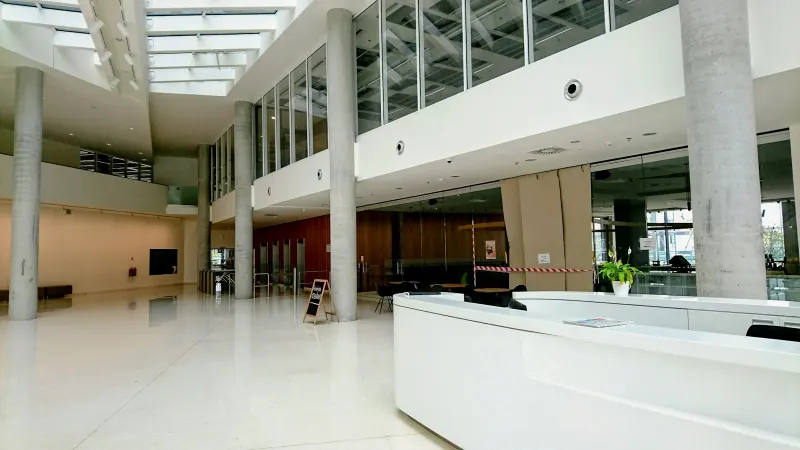
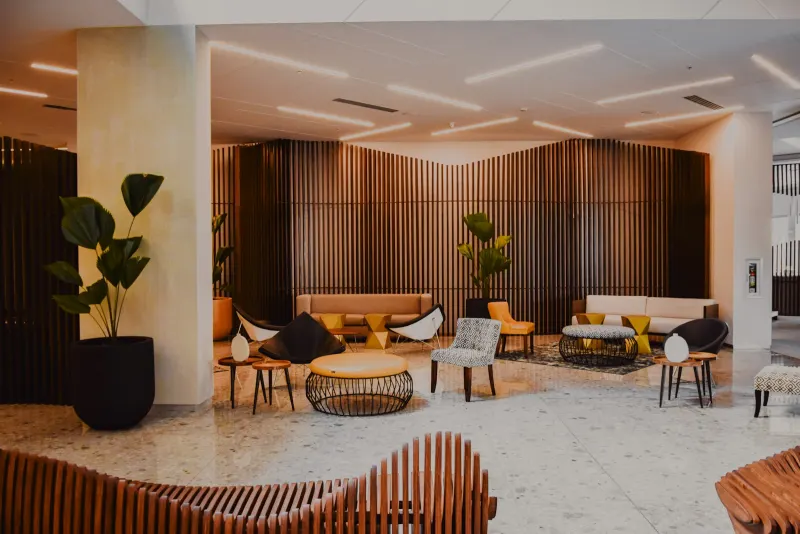
See where you will have your surgery and where you will recover, before you travel.



What you can check before you pay
The hospital
- Accreditation
- JCI-accredited, with the certificate number given to you in writing before any deposit.
- Licence
- Turkish Ministry of Health licence, named and verifiable independently rather than described in general terms.
- Intensive care
- On site, in the same building, for every procedure under general anaesthetic. Not "available nearby".
- Anaesthesia
- A consultant anaesthetist present throughout the operation — not supervising several theatres from elsewhere.
- Nursing
- 24-hour nursing, with an English-speaking nurse on each shift and an interpreter for clinical conversations.
Photos are not proof
Photographs show you the rooms; they do not tell you whether there is an intensive care unit behind them. The facility is named to you in writing before you pay, with its licence and accreditation numbers, so you can verify it as well as see it.
If you want to see the building in person, ask — we can usually arrange a visit before you decide, and a provider unwilling to let you look around is telling you something.
How we verify a facility



How is otoplasty performed?
One to two hours, usually under local anaesthetic with sedation, through an incision hidden in the crease behind the ear.
- 1Marking and measuring: your surgeon measures the distance from the helical rim to the head at the top, middle and lobe of each ear, and marks the planned correction. These numbers are what make the two ears match.
- 2Anaesthetic: local anaesthetic with sedation for most adults, or general anaesthetic if you prefer.
- 3Incision: made in the crease behind the ear, where the scar is completely hidden. A strip of skin is removed only where necessary.
- 4Creating the antihelical fold: the cartilage is scored on its front surface or shaped with a series of mattress sutures — the Mustardé technique — to recreate the fold that should curve within the ear. Scoring weakens the cartilage so it bends naturally rather than being forced.
- 5Reducing the conchal bowl: where the bowl is deep, cartilage is either excised or set back against the mastoid with sutures, bringing the whole ear closer to the head.
- 6Addressing the lobe: if the lobe still projects, it is repositioned. An ear pinned at the top with a protruding lobe is a recognisable failure.
- 7Checking symmetry: both ears are measured again at all three points with you sitting upright, and compared from the front rather than from behind.
- 8Closing: closed with fine sutures and a firm head bandage applied to support the new position and prevent a haematoma.
Otoplasty recovery timeline
The ears are tender for about a week and you are presentable within five to seven days. The headband is the demanding part — six weeks in total, and it matters.
- Days 1–2: a firm head bandage covers both ears. Tenderness and throbbing are normal, controlled with simple painkillers.
- Day 3: bandage removed and replaced with a lighter dressing. Ears look swollen, red and more pinned than the final result.
- Days 5–7: most patients are back at a desk job. Swelling settling. Headband worn day and night.
- Weeks 1–2: headband day and night. Sleeping on your back only — rolling onto a newly pinned ear can disrupt the sutures.
- Weeks 2–6: headband at night only. Normal activity, but no contact sport and nothing that could catch the ear.
- Weeks 6–8: headband can stop. Light exercise and swimming resume.
- Months 3–6: the final position settles. The ears relax outward very slightly from their immediate post-operative position, which is expected and planned for.
Is ear surgery in Turkey safe?
Otoplasty is a short, superficial operation with a low complication rate. The risks that matter are haematoma in the first 48 hours, asymmetry, and relapse of the correction.
Velsa works only with licensed hospitals and clinics in Istanbul and with plastic surgeons registered with the Turkish Ministry of Health who hold Turkish Society of Plastic, Reconstructive and Aesthetic Surgeons membership.
Risks you should know about
- Haematoma: the most urgent risk, in the first 48 hours, and the reason for the firm bandage and for staying nearby.
- Asymmetry: ears are never identical, and matching within about 3 mm is the realistic standard.
- Relapse: partial return of prominence, usually from inadequate cartilage shaping or from not wearing the headband.
- Over-correction: ears pinned too flat against the head look as unnatural as prominent ones, and are difficult to reverse.
- Telephone deformity: the middle of the ear pinned more than the top and bottom, leaving an hourglass shape.
- Keloid scarring: the skin behind the ear is a recognised keloid site, and worth raising if you are prone.
- Infection and chondritis: uncommon, but infection of the cartilage is serious and needs prompt antibiotics.
- Numbness: of the ear, usually temporary over a few months.
Tell your surgeon if you have ever had a raised, spreading scar from a piercing — earlobe piercings are a classic site for keloids, and a history there is directly relevant to an incision behind the ear.
Your medical team
Meet your ear surgery team
You meet your specialist in person before treatment, and they follow your recovery until you are fully healed.
Meet the whole teamFree online consultation
Start your ear surgery journey
- 1Share your detailsFill in the form in under a minute.
- 2Send your photosYour coordinator tells you which photos we need, via WhatsApp or email.
- 3Receive your planA specialist reviews your case and you get a written, all-inclusive quote.
Can ear surgery be combined with other procedures?
Easily. Otoplasty is short and superficial, so it adds little to another facial procedure and is often done alongside rhinoplasty or earlobe repair.
Because the operation is performed under local anaesthetic with sedation and takes one to two hours, it fits comfortably alongside most other facial work without pushing anaesthetic time anywhere near its limit.
Commonly combined with
- Earlobe reduction or repair: large, stretched or split lobes addressed in the same sitting, adding minimal time.
- Rhinoplasty: the two most common facial-proportion operations, frequently done together. See rhinoplasty.
- Chin or jawline contouring: facial balance is about proportion, and ears, nose and chin all contribute. See chin and jawline contouring.
- Hair transplant: possible in the same trip, though the headband after otoplasty complicates hair transplant aftercare — your surgeon will advise on sequencing.
If you are considering both otoplasty and a hair transplant, mention it early. The six-week headband presses exactly where donor grafts are harvested, so the two usually need separating or careful sequencing.
How to prepare for ear surgery
Send photographs with your hair pulled back, declare any keloid history, buy a spare headband, and plan to sleep on your back for a fortnight.
- Photographs: front, back and both sides, with hair held completely clear of the ears. The front view is what the surgeon plans from.
- Keloid history: tell your surgeon if you have ever had a raised scar from a piercing, cut or acne. The skin behind the ear is a recognised keloid site.
- Medication: tell your surgeon everything you take. Blood thinners and anti-inflammatories increase the risk of haematoma, which is the main early complication here.
- Smoking: stop at least four weeks before and after. Skin behind the ear has a modest blood supply.
- Spare headband: buy a second so you can wash one and wear the other for six weeks.
- Sleeping: plan to sleep on your back for two weeks. A travel pillow either side of your head helps if you tend to roll.
- Time off: plan five to seven days. The bandage is obvious for the first three days, and the headband afterwards is discreet but visible.
Otoplasty results
The result is essentially permanent and among the most reliably satisfying in aesthetic surgery. The ears settle outward very slightly over three to six months, which is anticipated in the planning.
Otoplasty consistently reports some of the highest satisfaction rates in plastic surgery, for a simple reason: the complaint is specific, the correction is objective and the result does not depend on ageing, weight or healing quality in the way most aesthetic operations do. Patients who have spent decades arranging their hair to cover their ears tend to describe the change as disproportionate to the size of the operation.
The aim is normal rather than flat. Ears pinned hard against the head look as obviously operated on as prominent ones, and a natural result preserves the gentle outward curve at the top and a visible fold within the ear. The scar sits in the crease behind the ear and is invisible from any angle anyone looks at you from. As consented cases are added, our before and after gallery shows front and rear views at three and twelve months.
FAQ
Ear surgery in Turkey: frequently asked questions
At Velsa, £1,400–£1,900 for both ears under local anaesthetic with sedation, or £1,700–£2,100 under general. That covers the surgeon, anaesthetist, five hotel nights, transfers, headband and twelve months of aftercare. Flights are not included.
No. The incision sits in the crease behind the ear, invisible from the front, the side and from behind once healed. It is one of the best-hidden scars in facial surgery.
Because ears are judged against each other. Correcting one to a textbook position beside an untreated ear usually looks more asymmetric than before. Operating on both to match them produces a better result.
Yes — day and night for two weeks, then nights only for four more. The sutures hold the cartilage while scar tissue forms around it, and rolling onto an ear during sleep is the most common cause of partial relapse.
Tender rather than painful, for about a week. Simple painkillers are enough. Increasing throbbing pain on one side in the first 48 hours is different — that suggests a haematoma and needs seeing urgently.
Five to seven days for a desk job. The head bandage is obvious for the first three days; the headband afterwards is discreet but visible, and most patients are comfortable with it.
Essentially permanently. The ears settle outward very slightly over three to six months, which is anticipated and planned for. Otoplasty is one of the few aesthetic operations whose result does not degrade with age.
No. Velsa does not treat patients under 18. Otoplasty in childhood is common and appropriate in many countries, but it should be done where the child lives, with straightforward follow-up, rather than abroad.
Ear reduction is possible but it is a different and less predictable operation, and it leaves scars on the ear itself rather than behind it. Most people who think their ears are large actually have prominent ears, and pinning them resolves the complaint.
Yes, under local anaesthetic in about thirty minutes, for £500–£900. Split lobes from heavy earrings and stretched lobes from gauges are both straightforward. If you are already travelling for something else, it adds almost no recovery time.
After earlobe repair, the lobe must be left unpierced for about three months before being re-pierced in a new position. After otoplasty alone, existing piercings can be used again once the dressings are off and the ear is comfortable.
When the middle of the ear is pinned more than the top and bottom, leaving an hourglass outline. It is a technique failure rather than bad luck, and it is avoided by measuring and correcting at three points along the ear rather than concentrating on the middle.
Medical disclaimer: This page is for general information only and does not replace a consultation with a qualified surgeon. Prices depend on your individual assessment. Every surgery carries risks, and individual results vary.